Magnetic Tiles
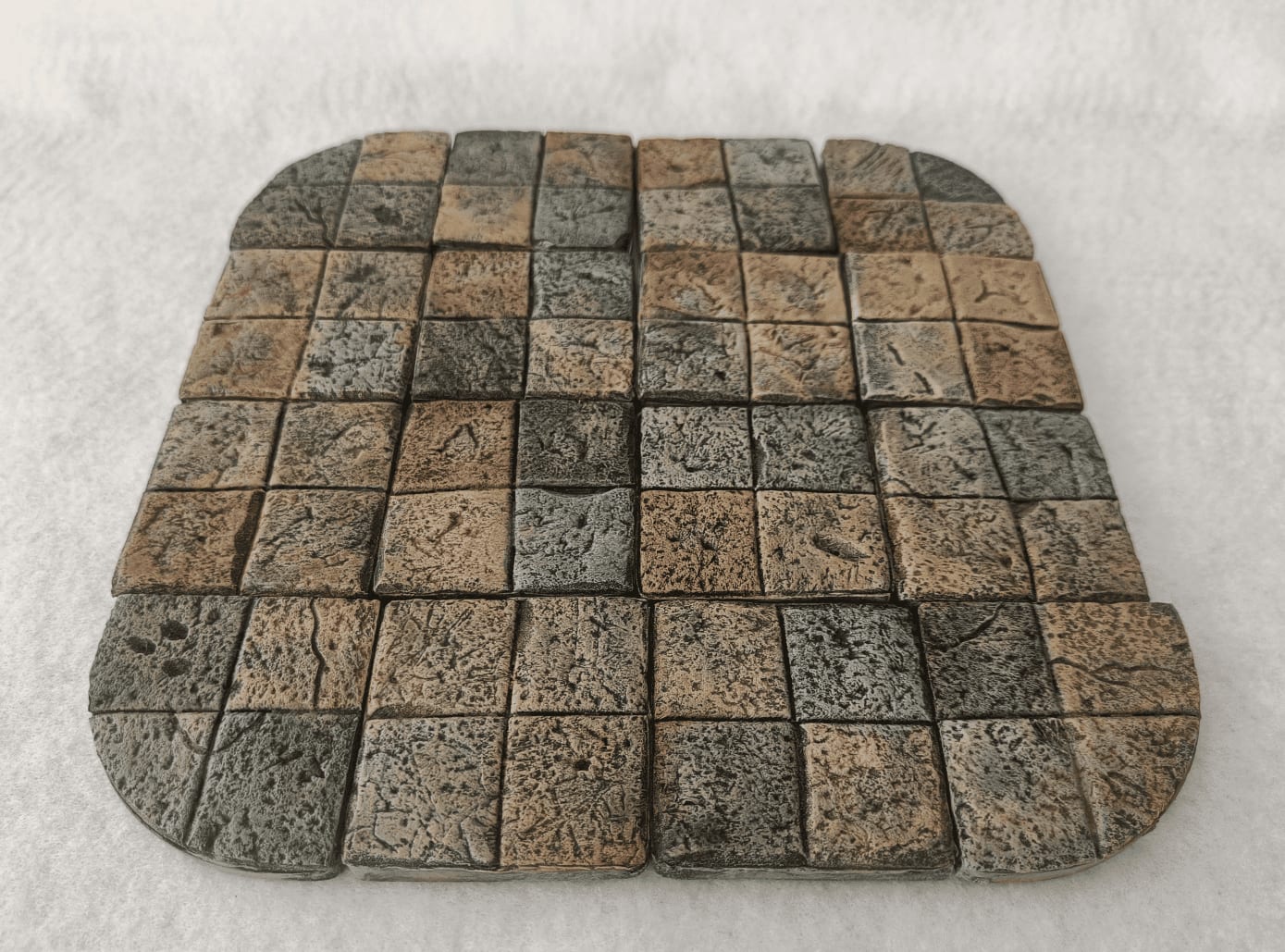
These are magnetic tiles for dungeon layouts that I made from baby toy pieces. My daughter has been playing with these since she was 3 years old. I didn’t want to take away her toys, but I realized they would make really practical terrain. They’re magnetized in the corners, so they snap together well. The square format has exactly the right dimensions. I’ve wanted to build this for a long time, and I finally got to make it happen.
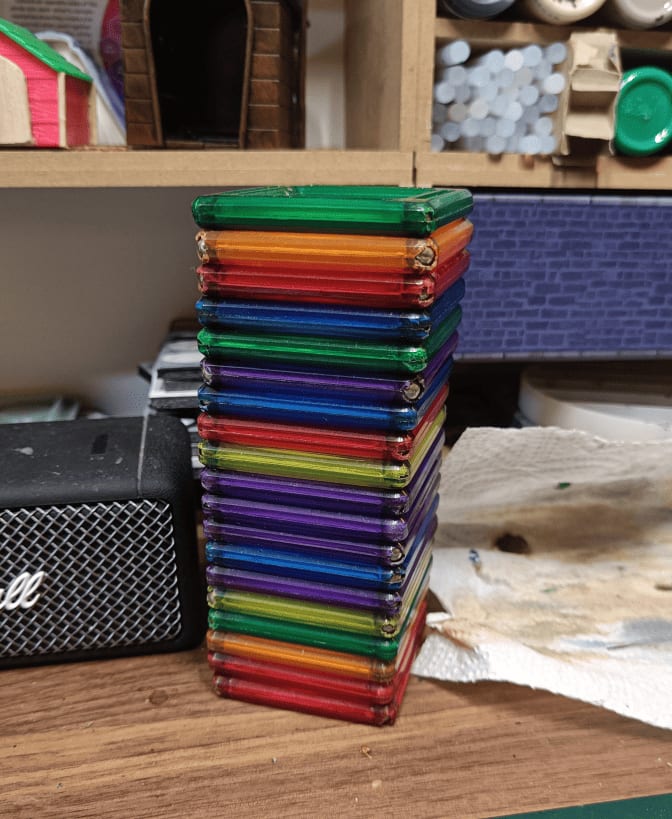
This is the original material, a stack of super colorful plastic tiles with magnetic beads in each corner. You can see they’ve been well-used because the magnets make them bang into each other constantly. Eventually the corners break and the beads come out, which is extremely dangerous for children but also means it’s time to transform them into terrain.
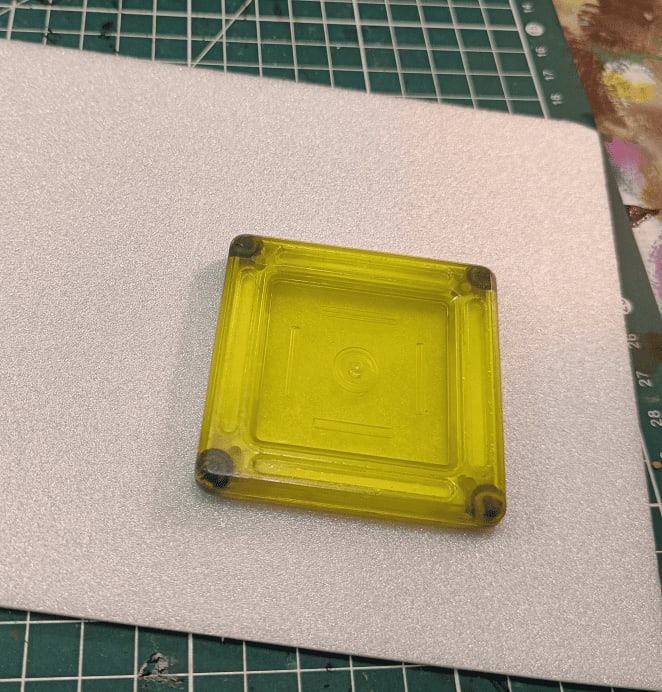
Here’s a closer view of what they look like.
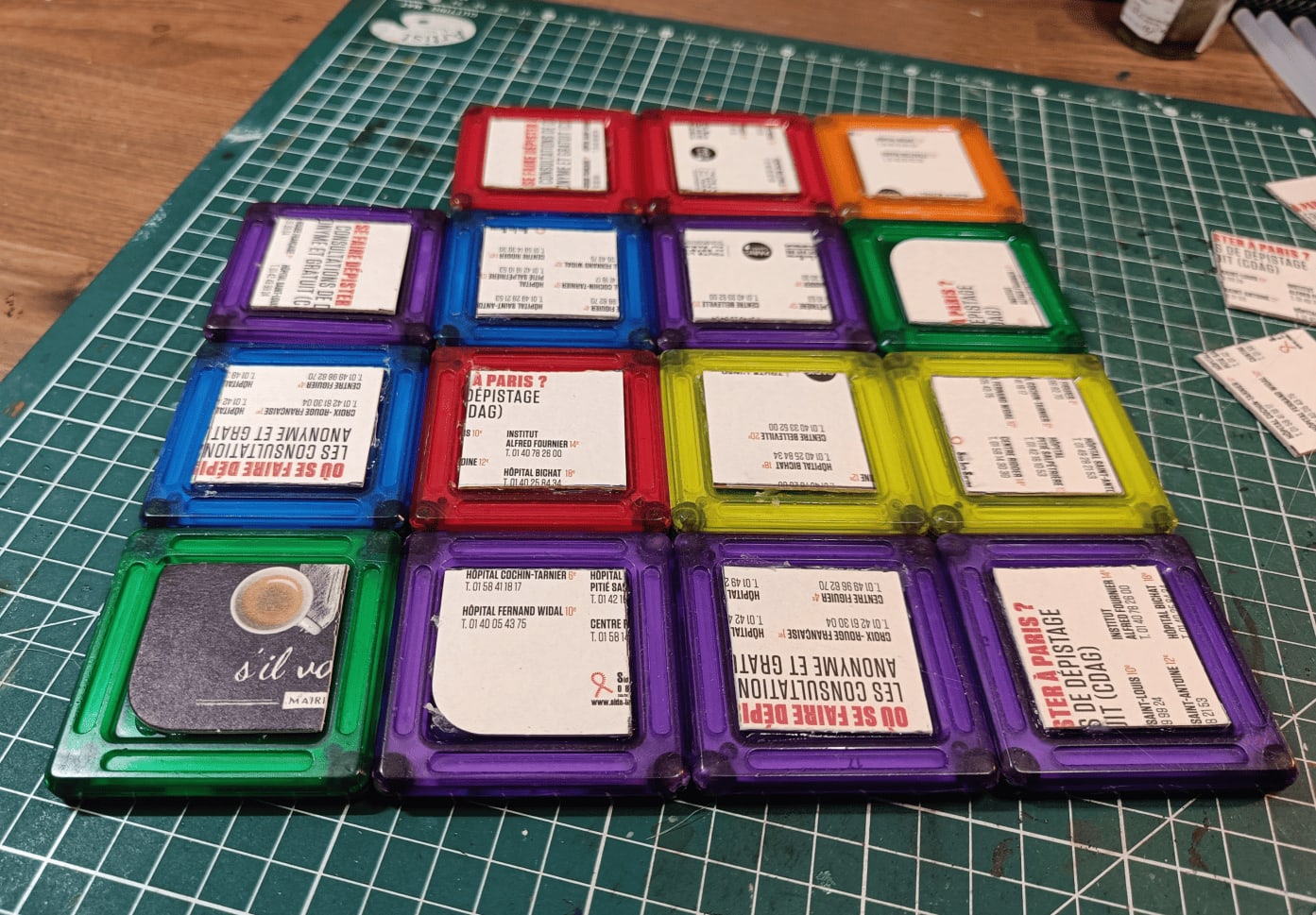
Since there’s a small recess on the inside, I fill it with cardboard pieces of exactly the same thickness, gluing them to the center to create a flush surface.
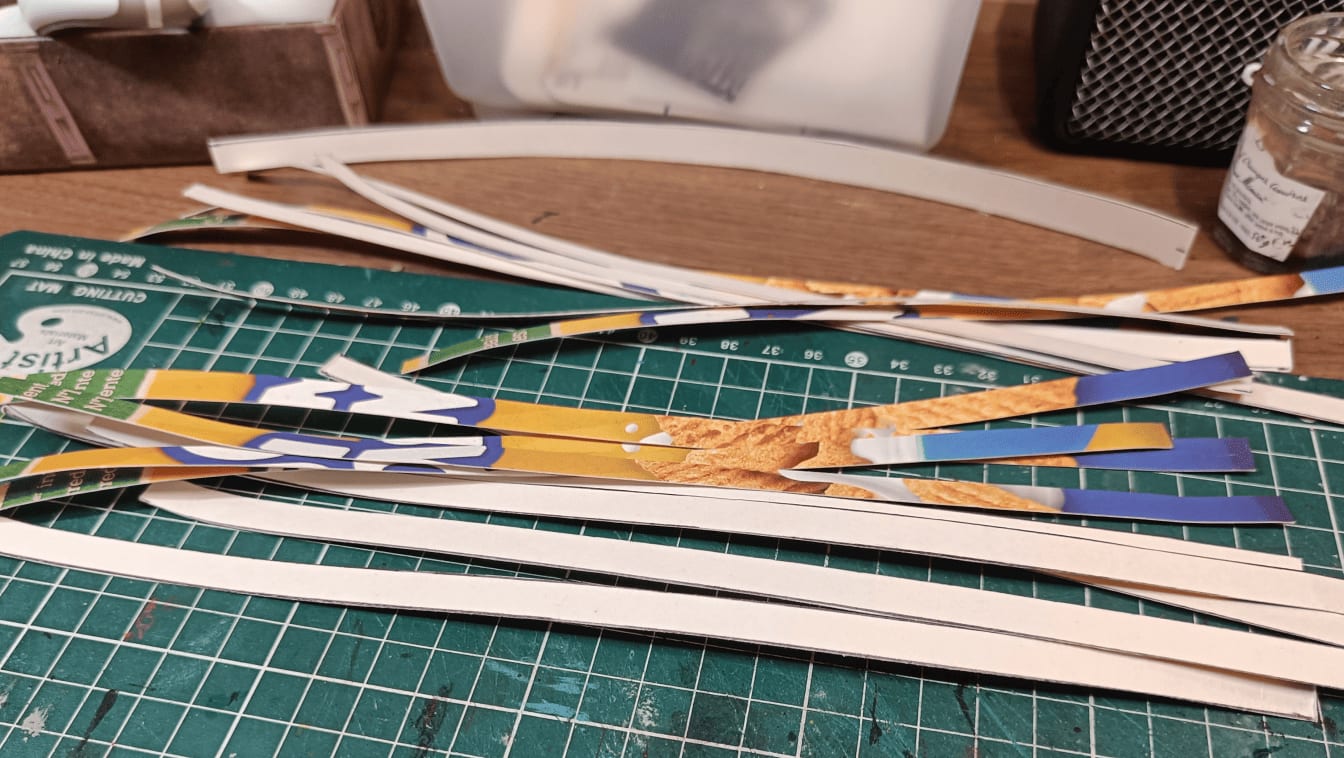
I cut strips from a cereal box.
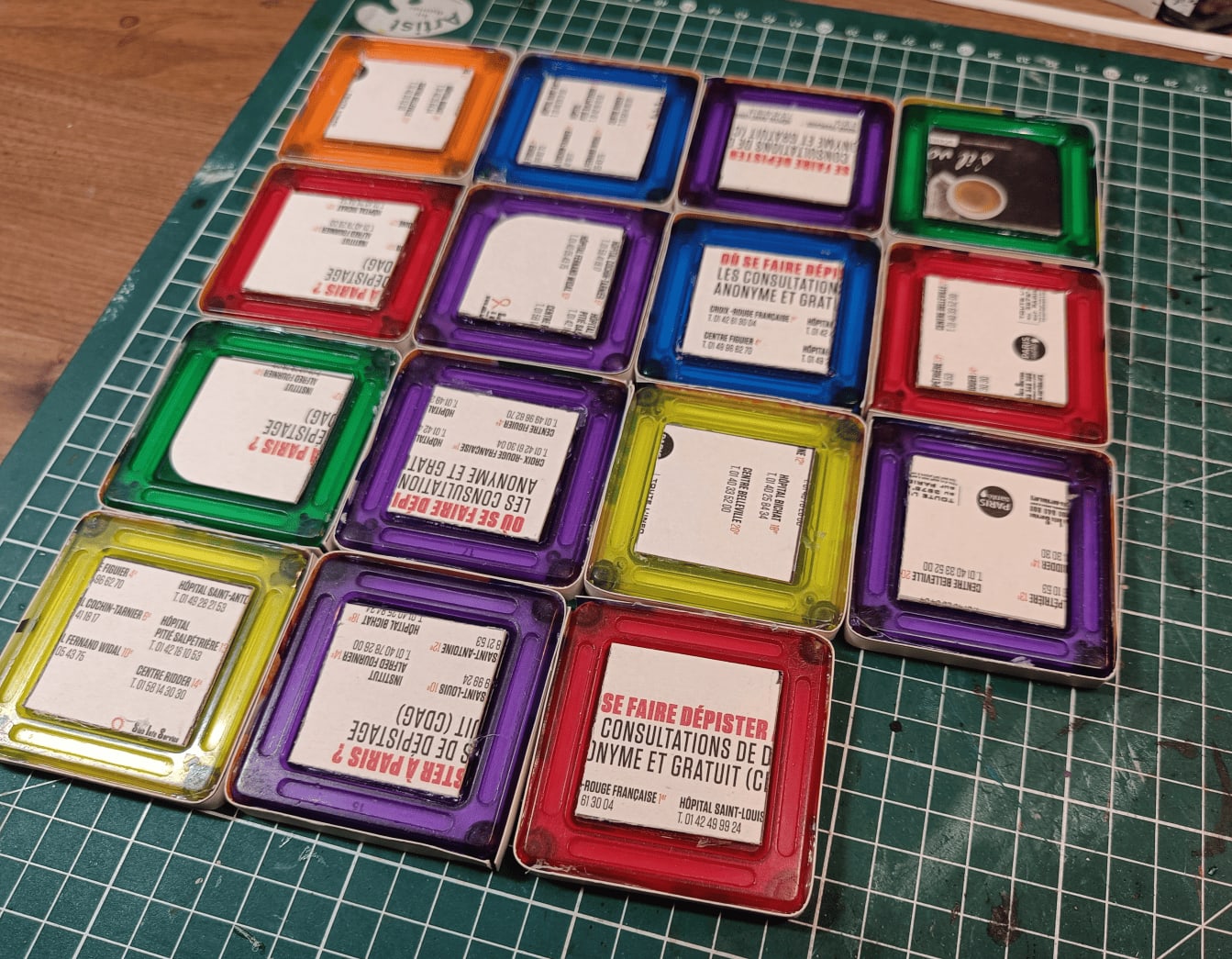
I glued these strips all around my tiles to give them completely straight edges. The cardboard isn’t thick enough to prevent the magnets from working.
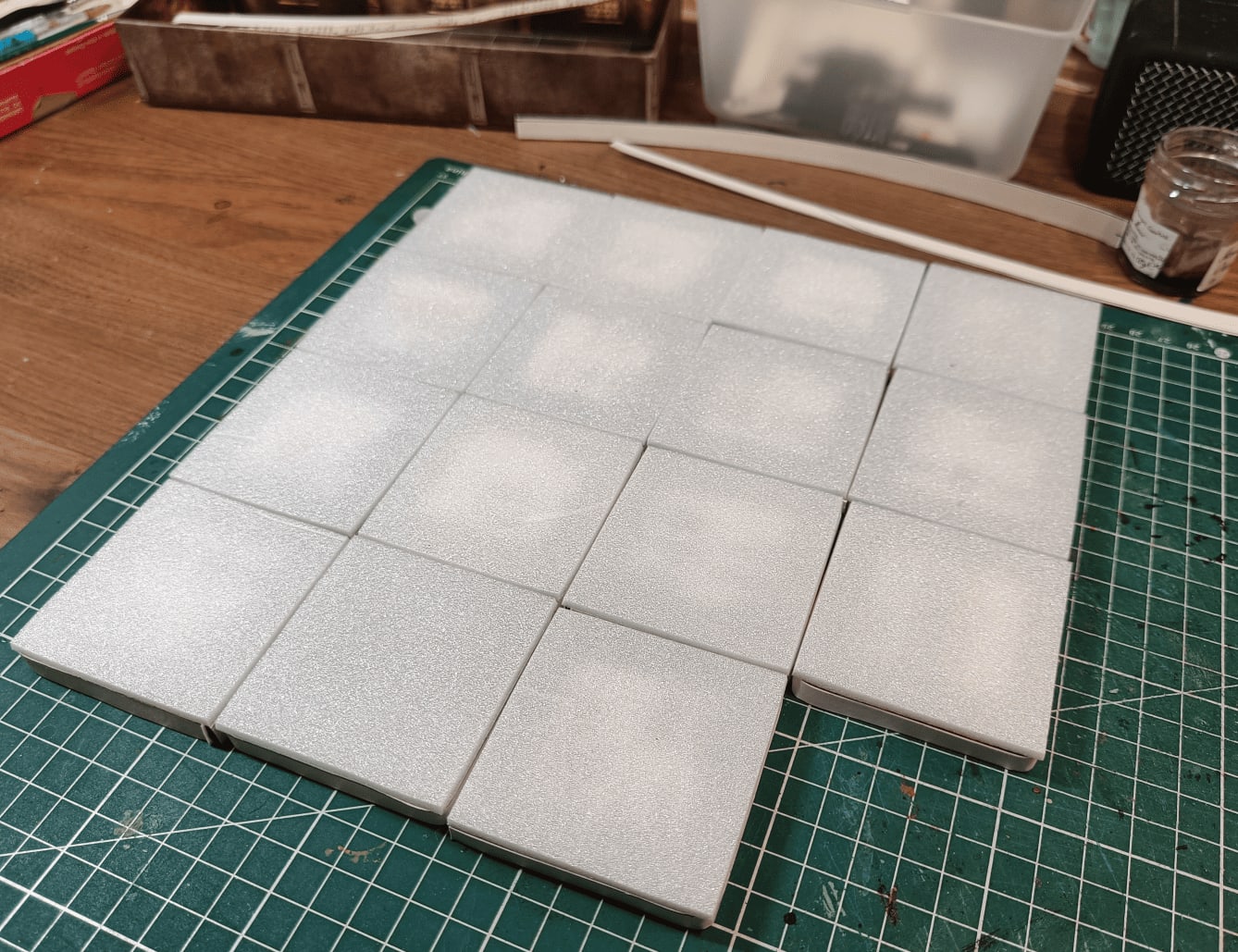
I glued them all onto foam, then cut around them with a cutter so everything sits completely flush. This is really my favorite technique now. Rather than trying to cut foam pieces to the right dimensions first, I glue the tiles directly onto a large sheet and then cut flush. That way they’re exactly the right size.
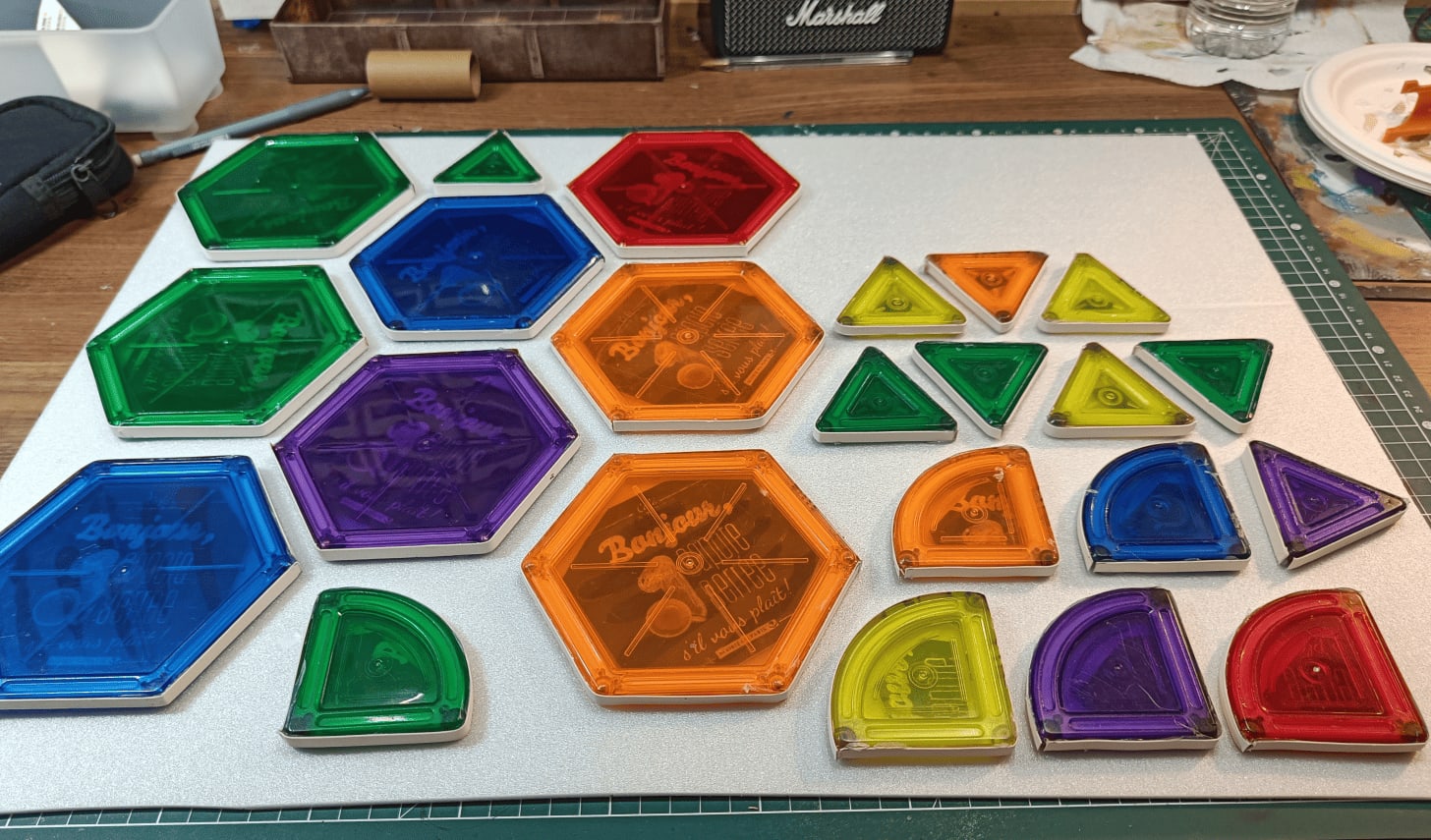
I used the same technique for all the other special shapes: hexagons, triangles, and curves. I glued them right onto the foam and then cut everything out.
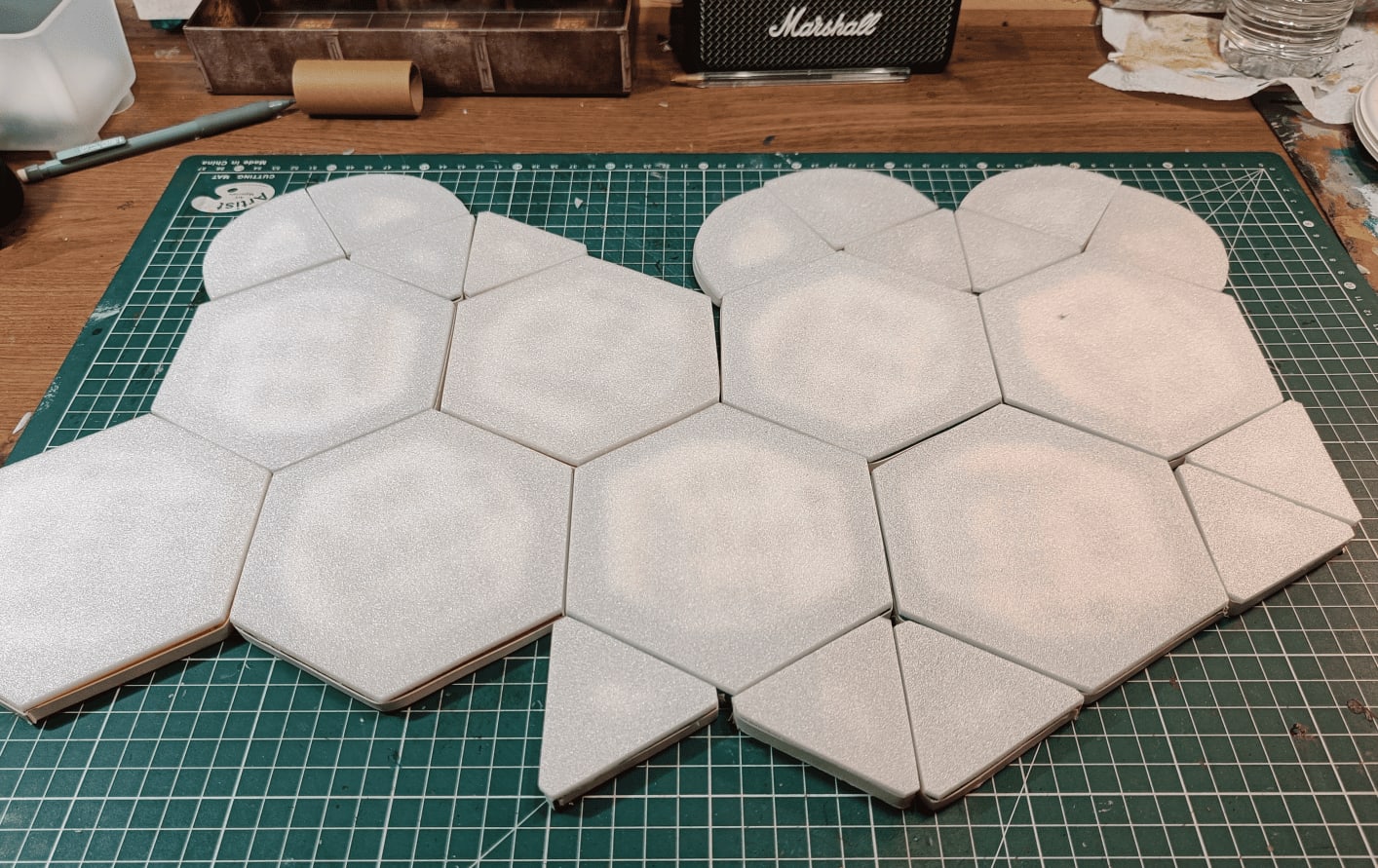
Here are the different cut pieces. In the end, I didn’t really use the hexagons because they’re not very practical for making interesting rooms. If I had a lot of them it might have been different, but I don’t have enough.
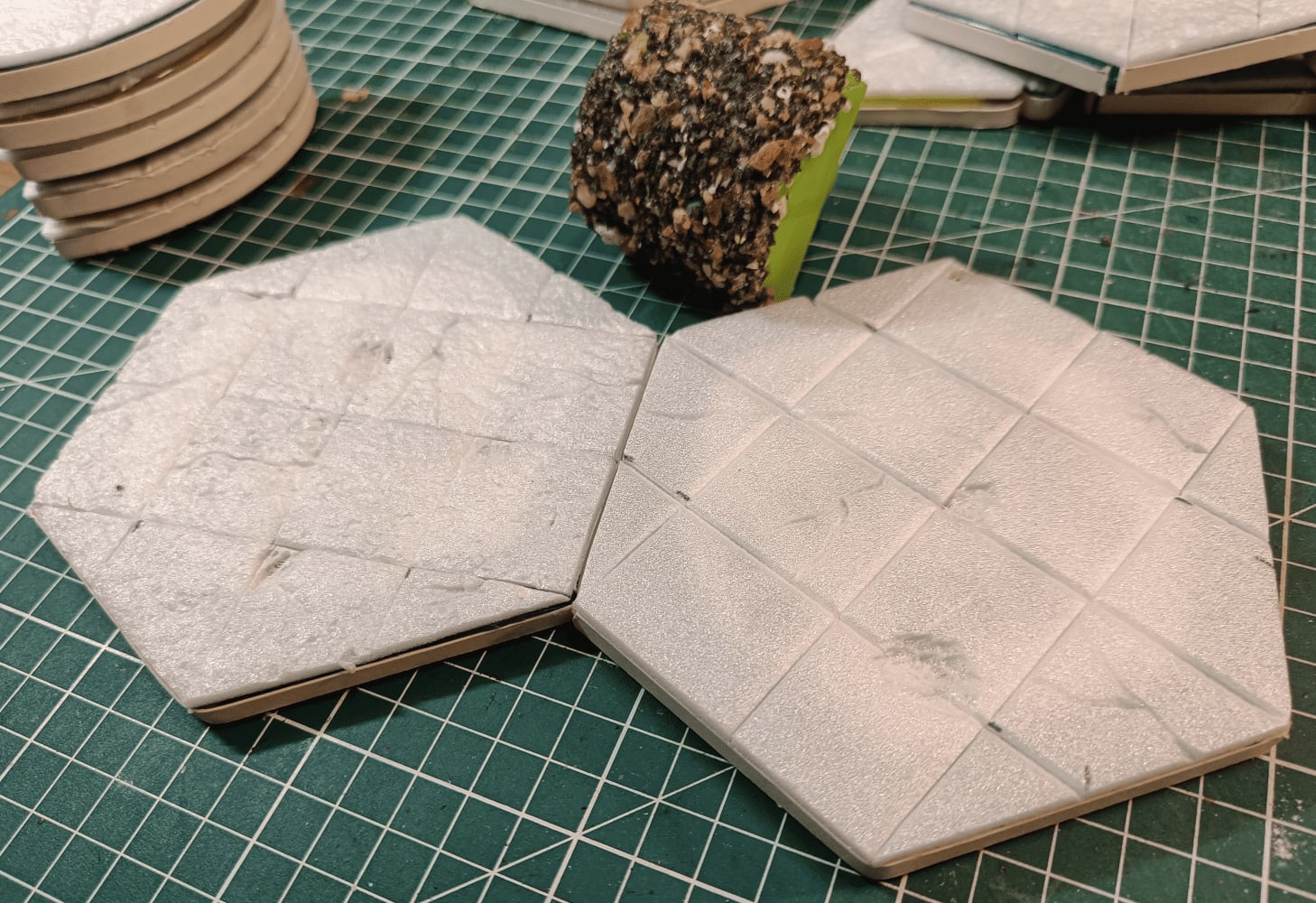
I texture the foam by pressing lines and wear marks into it with a ballpoint pen on the right side. On the left side, I used my texture roller which gives this stone-like effect when you press down on it.
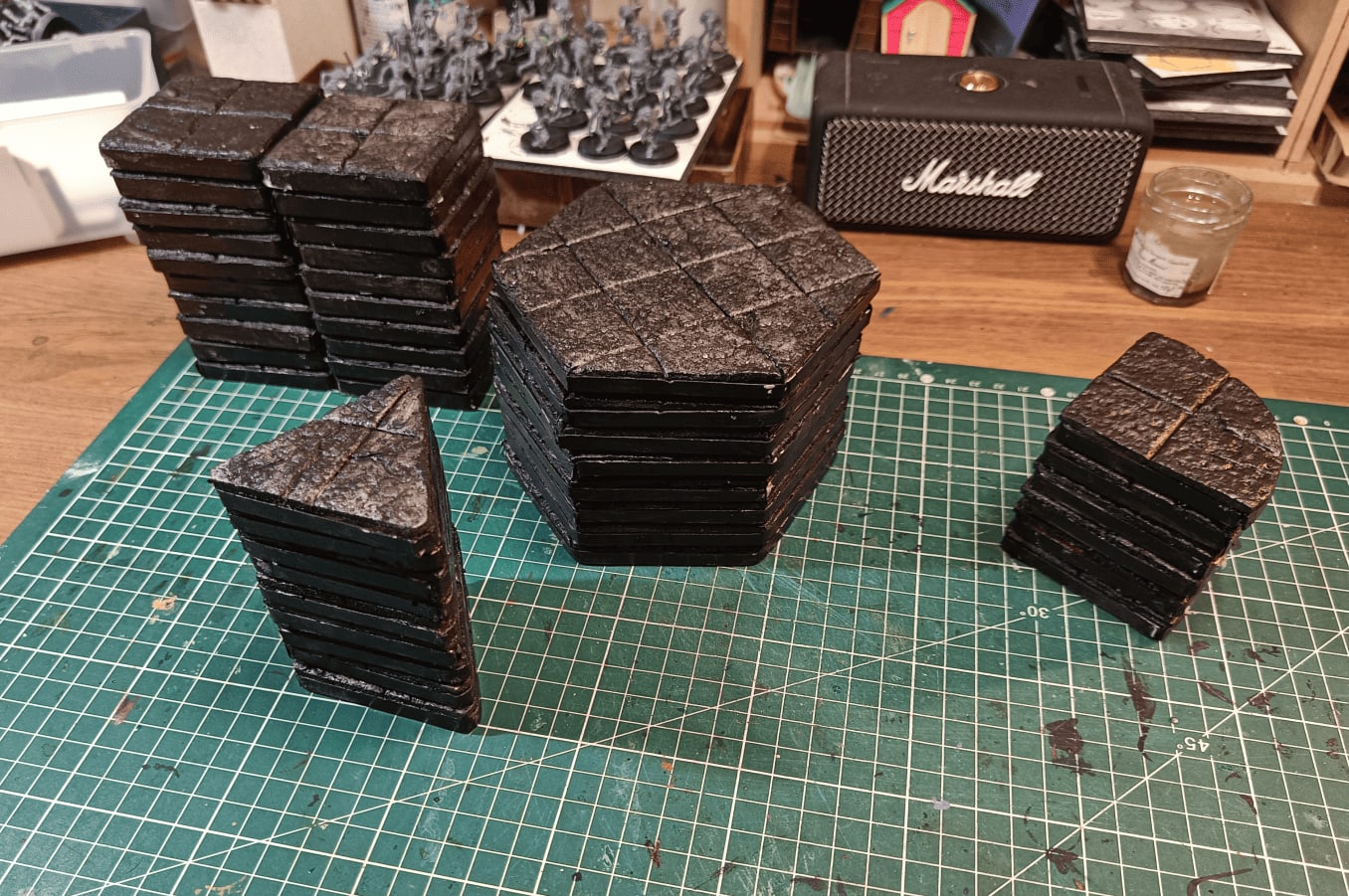
They’ve all been painted. A mix of black paint and PVA glue to help protect them a bit.
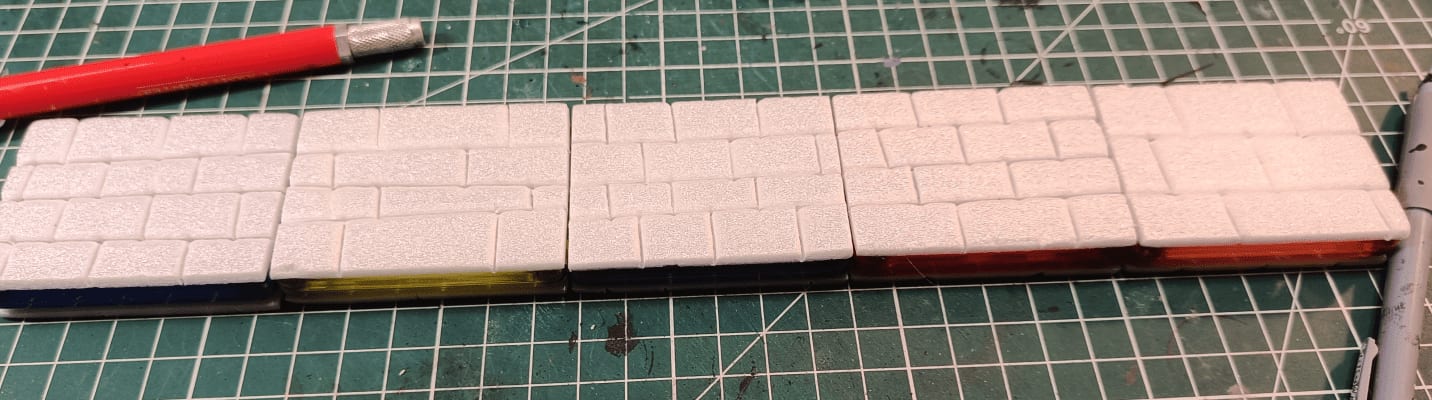
I also took advantage of the fact that some parts were rectangular to make walls.
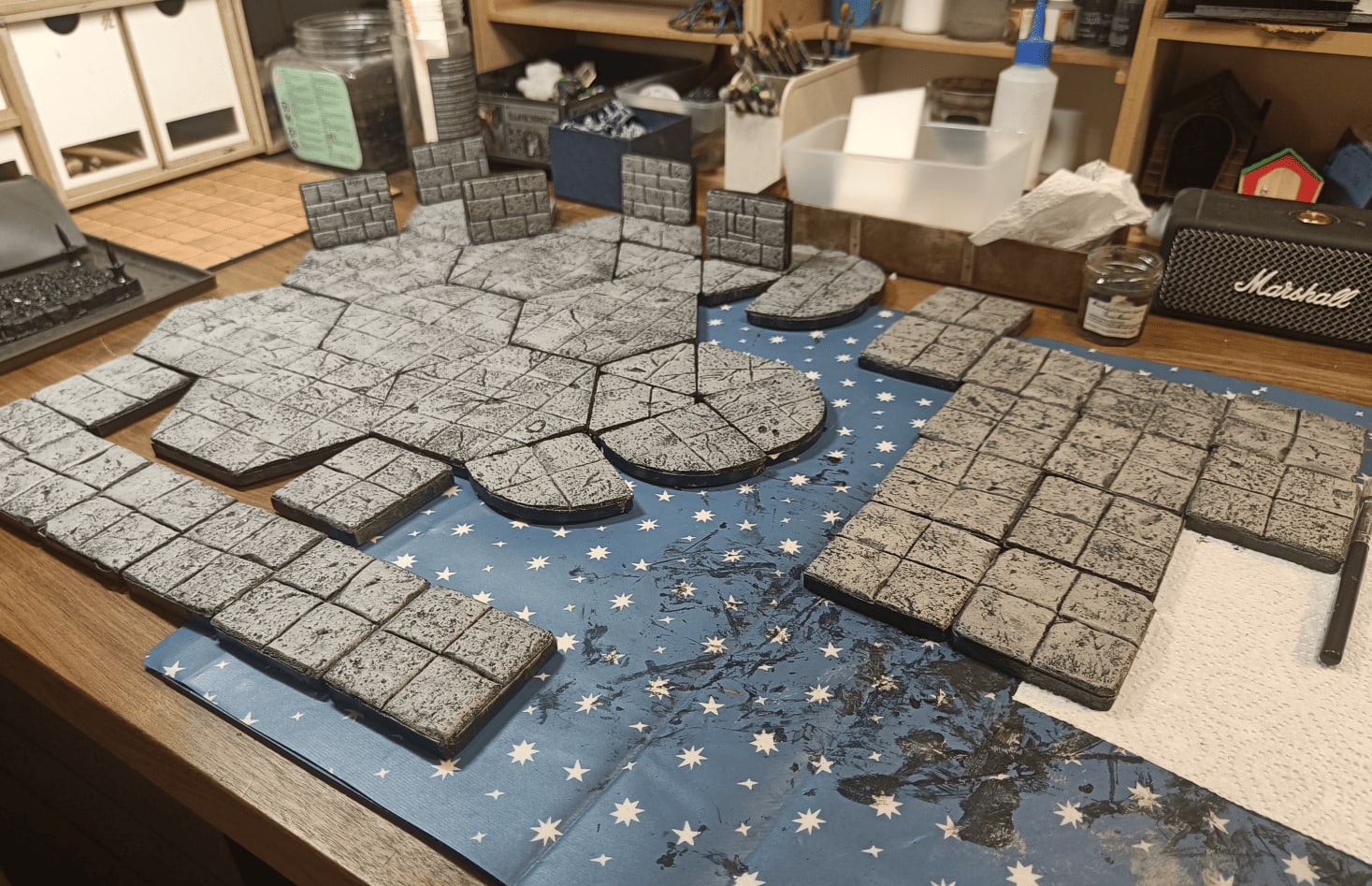
Here’s everything I was able to create with my starting set: vertical walls, quite a few square tiles, and the hexagonal tiles. The hexagonal tiles work well for large rooms but don’t have much modularity. The square tiles and occasionally the slightly rounded tiles ended up being the ones I used the most.
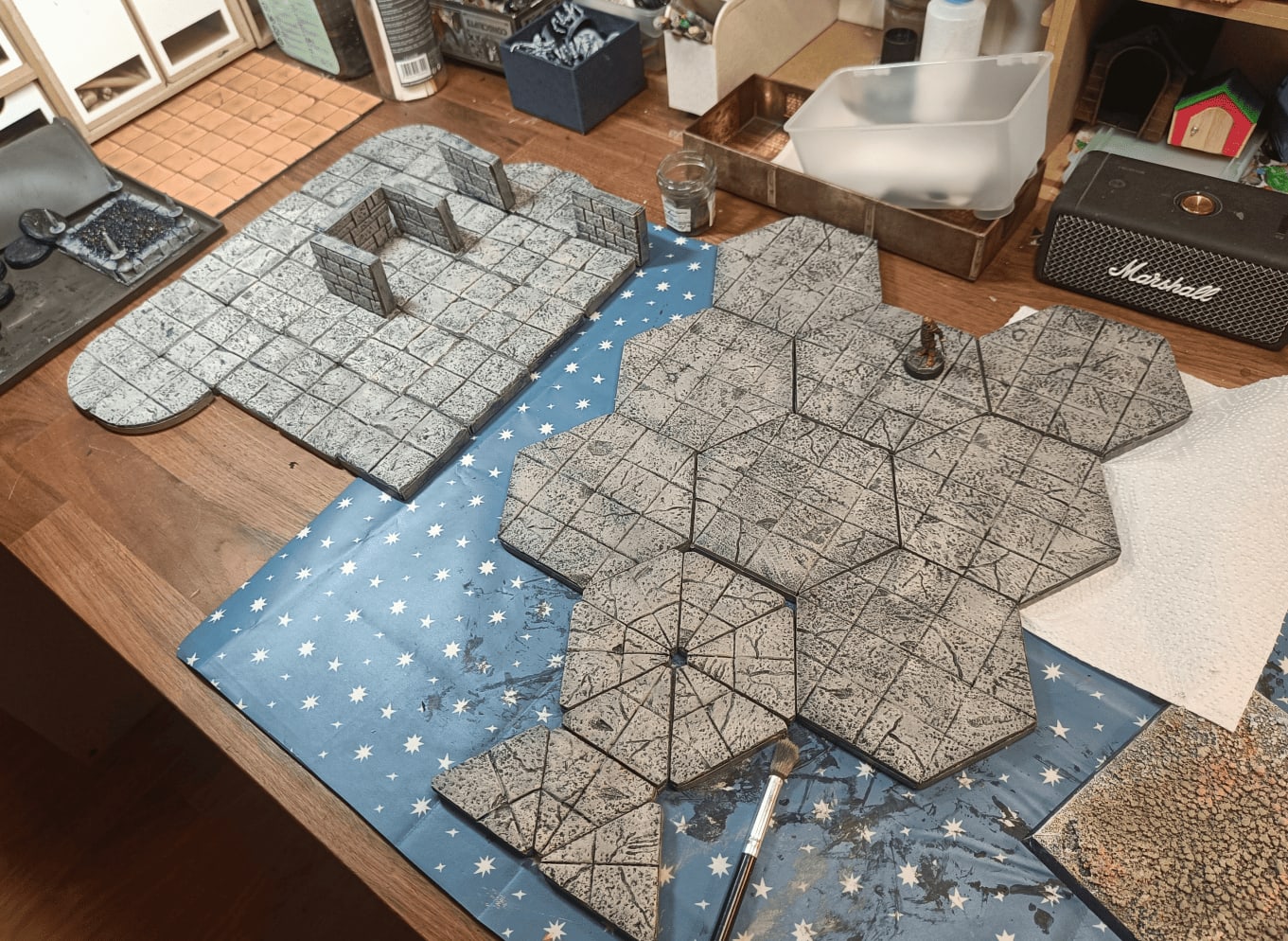
Here’s a view from above.
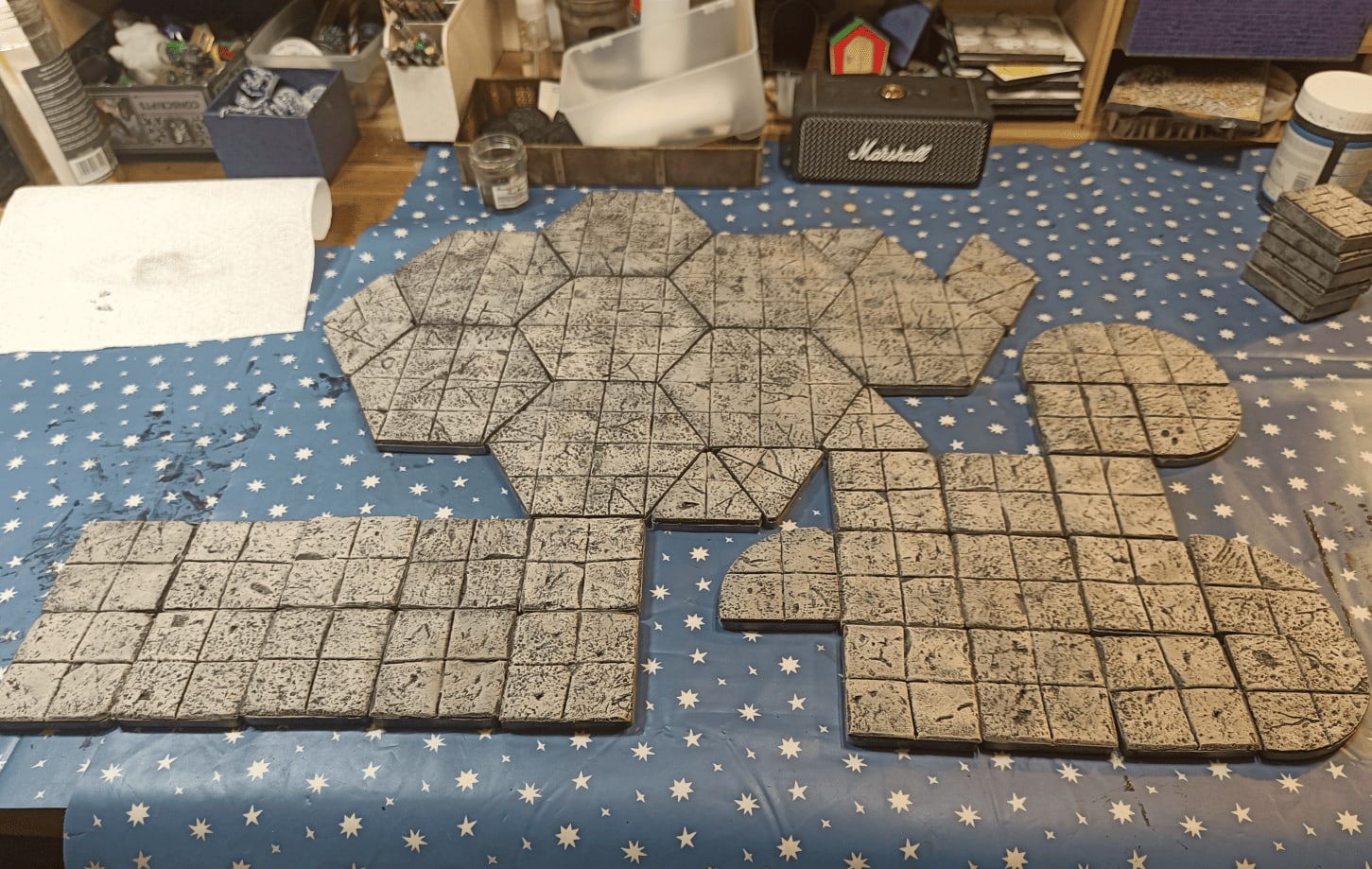
I positioned everything on a large sheet so I could paint them. At this point, they just have the drybrushing to make them base gray.
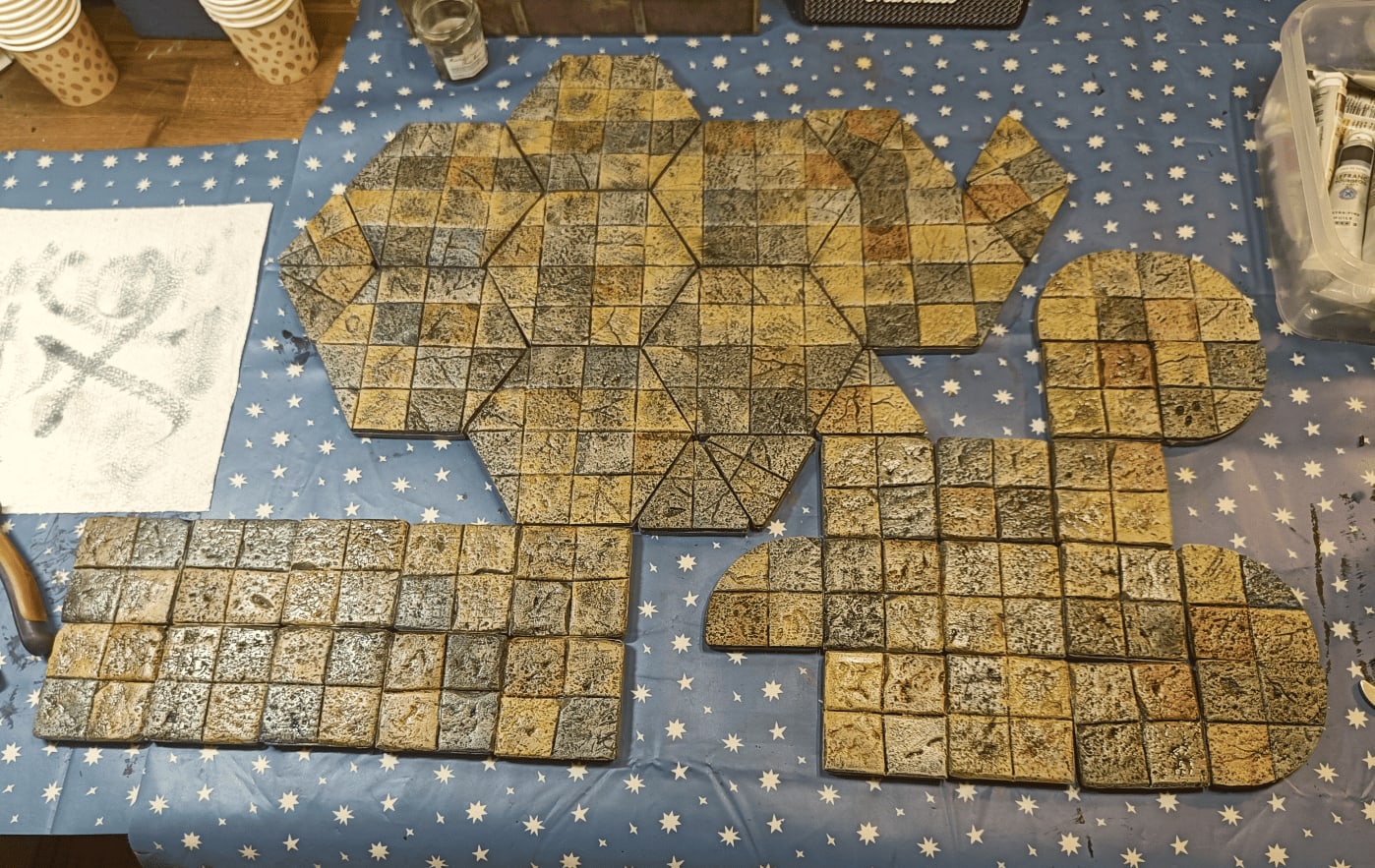
After applying washes to each tile individually, I used oil paint directly in different colors: dark red, dark green, ochre, etc. With each color, I painted different tiles somewhat randomly, then mixed in a bit of another color to change the shade and continued. From time to time I started over with a new shade so that all the tiles wouldn’t just be the base gray color.
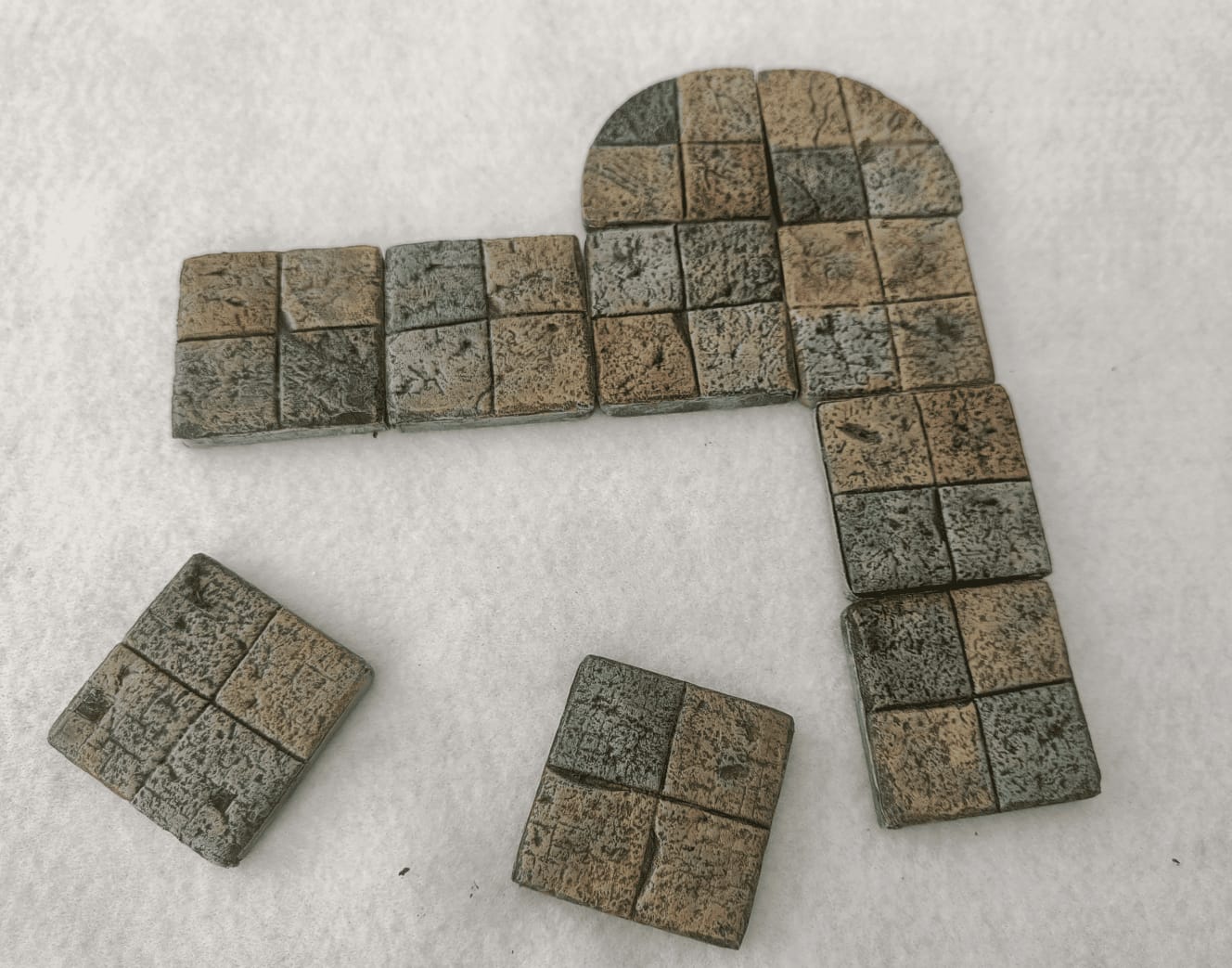
Here’s what it looks like once dried. It looks super colorful in the photo, but in-game it gives a stone look without being boringly gray.
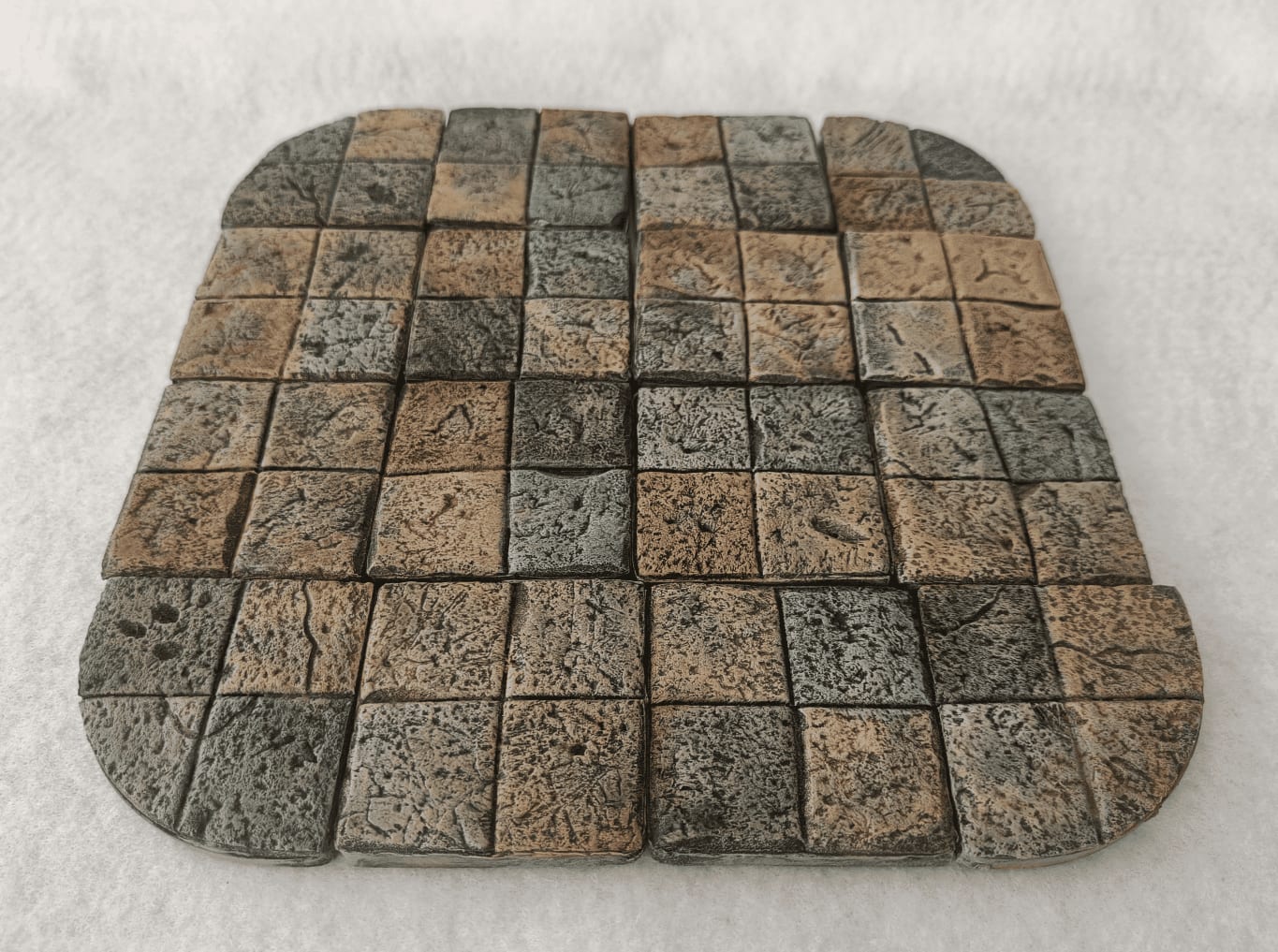
This is the final result. I’m quite happy with what I made here, and it’s served us in many different sessions, mainly for making corridors. It’s our go-to for corridors because if they extend into a small room, it’s easy to adapt. The set fits in a drawer without problem, but I would have needed more.
I can’t find exactly this brand anymore to make additional tiles. I found another brand that’s easier to source, but the dimensions aren’t quite the same. The tiles are a bit wider (not a problem) but more importantly they’re thinner, which means the two systems won’t be compatible. So I started making new tiles with this other brand, though they aren’t finished yet.
This means I might not reuse these tiles long-term. I’ve already started giving away the hexagonal tiles to people around me. The square tiles, though, I’m keeping.