Qadira Desert Houses
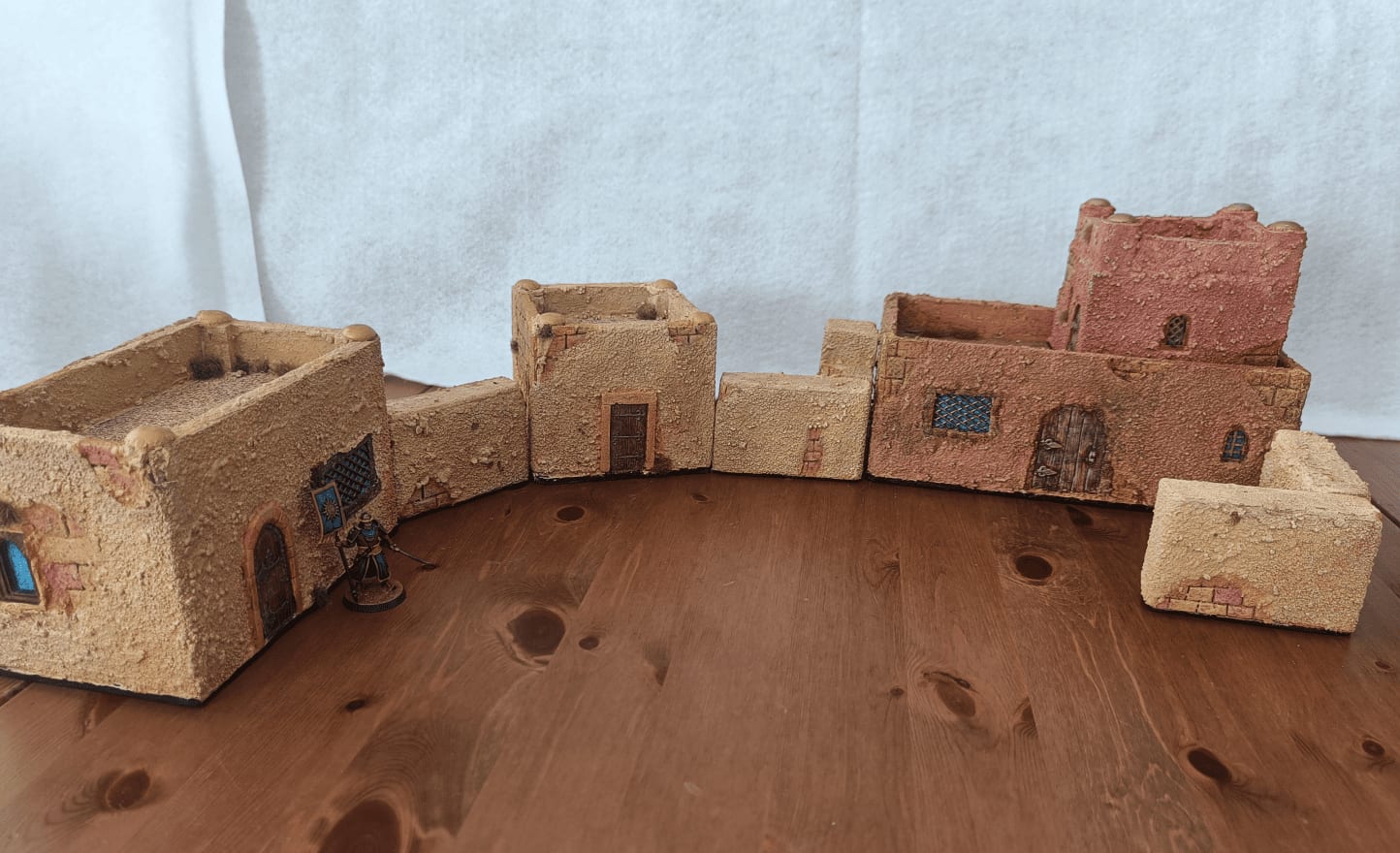
My players are crossing the desert of Qadira in Golarion, and I needed some terrain for the desert city encounters ahead. I built several modular houses that can stack on each other, along with stairs and small walls. The result is solid and durable.
The buildings shown here are modular and can stack on each other. I tried two color schemes: the pinkish one was my first attempt and didn’t work well, so I switched to a paler version that looks much better.
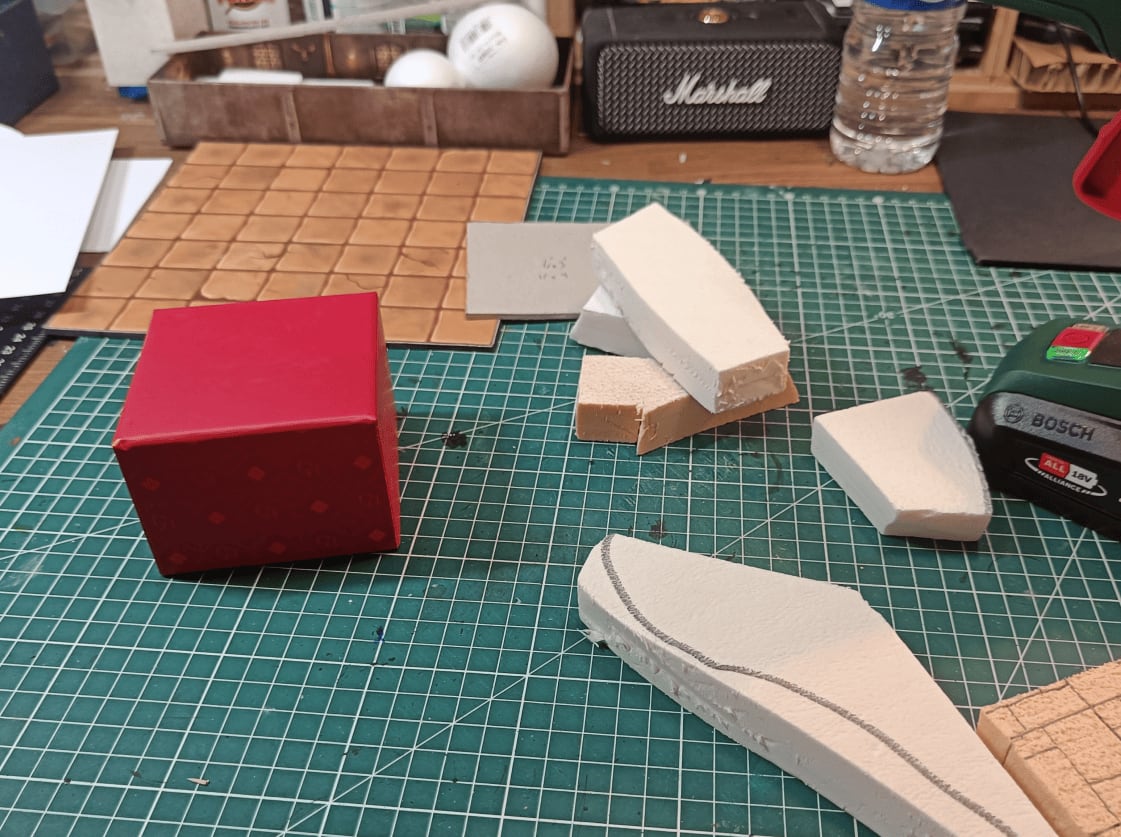
Since the houses have very cubic shapes, I used boxes as the starting material.
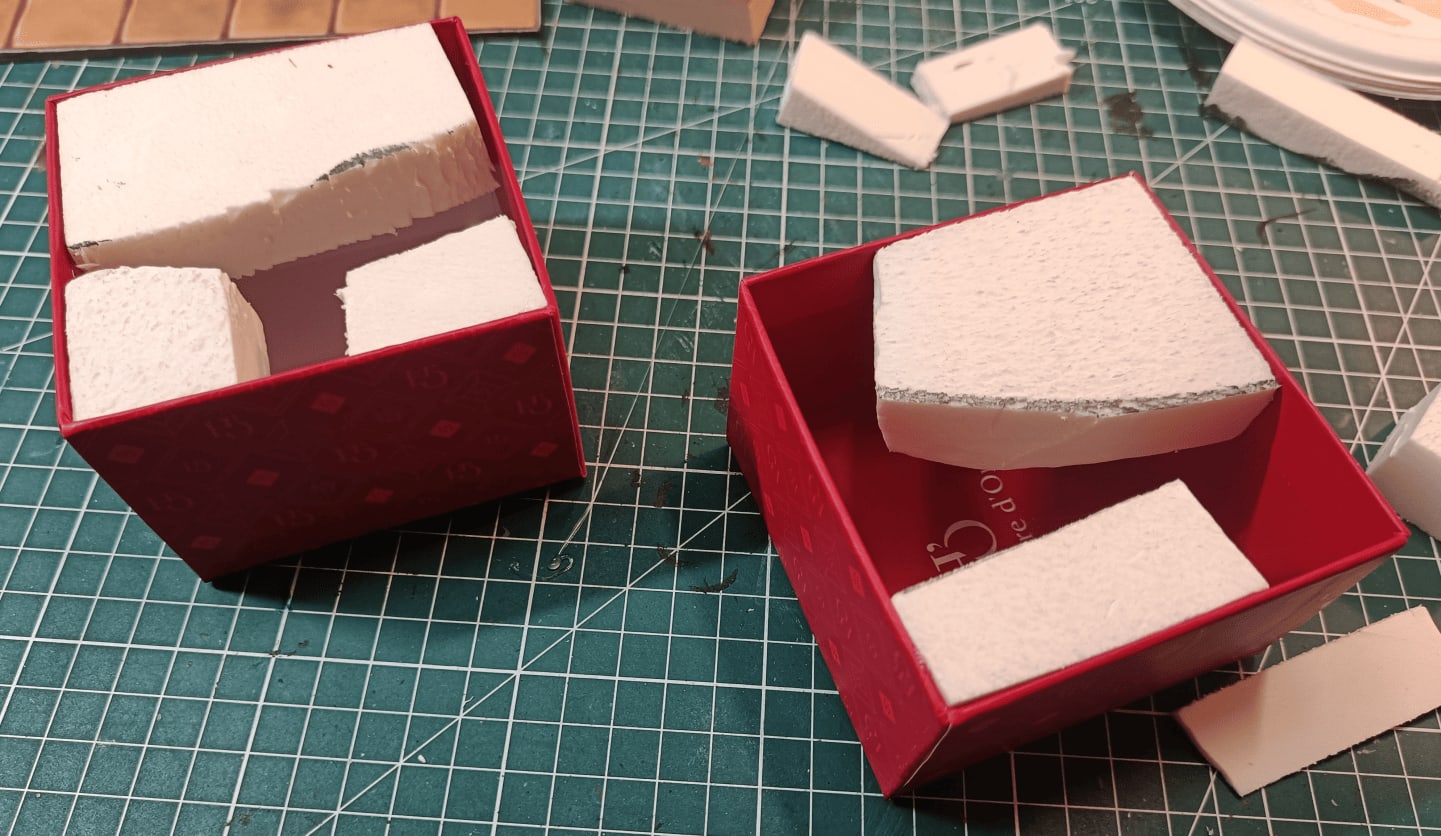
I glued foam at the bottom of the boxes to create more surface area for attaching them to a base.
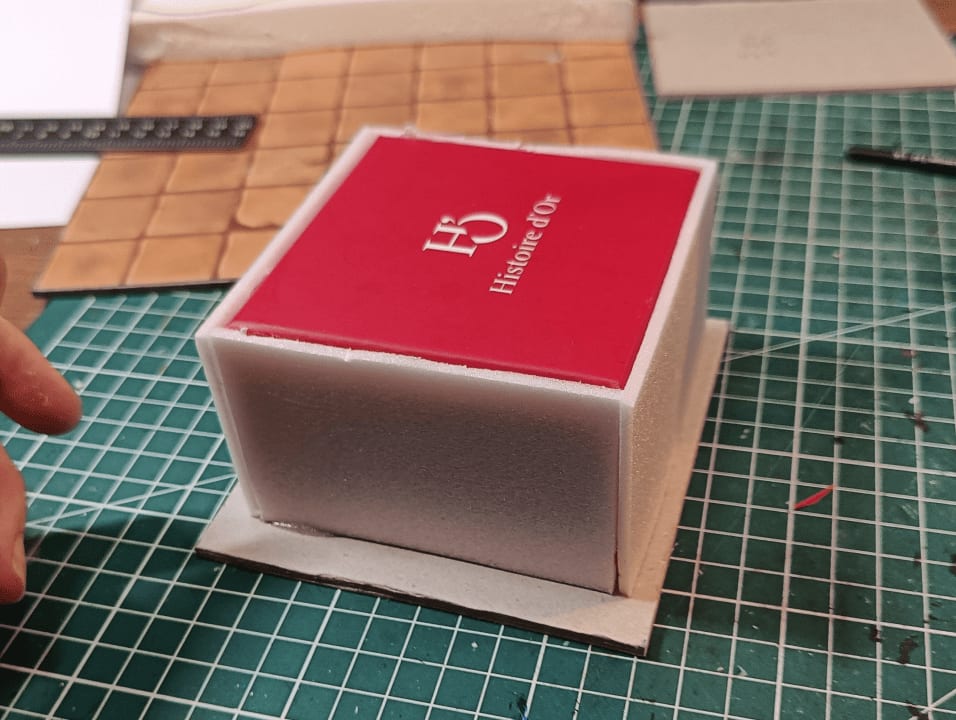
I glued the box onto a thick cardboard base and added thin foam slices all around, planning to cut them flush later to make the base almost invisible.
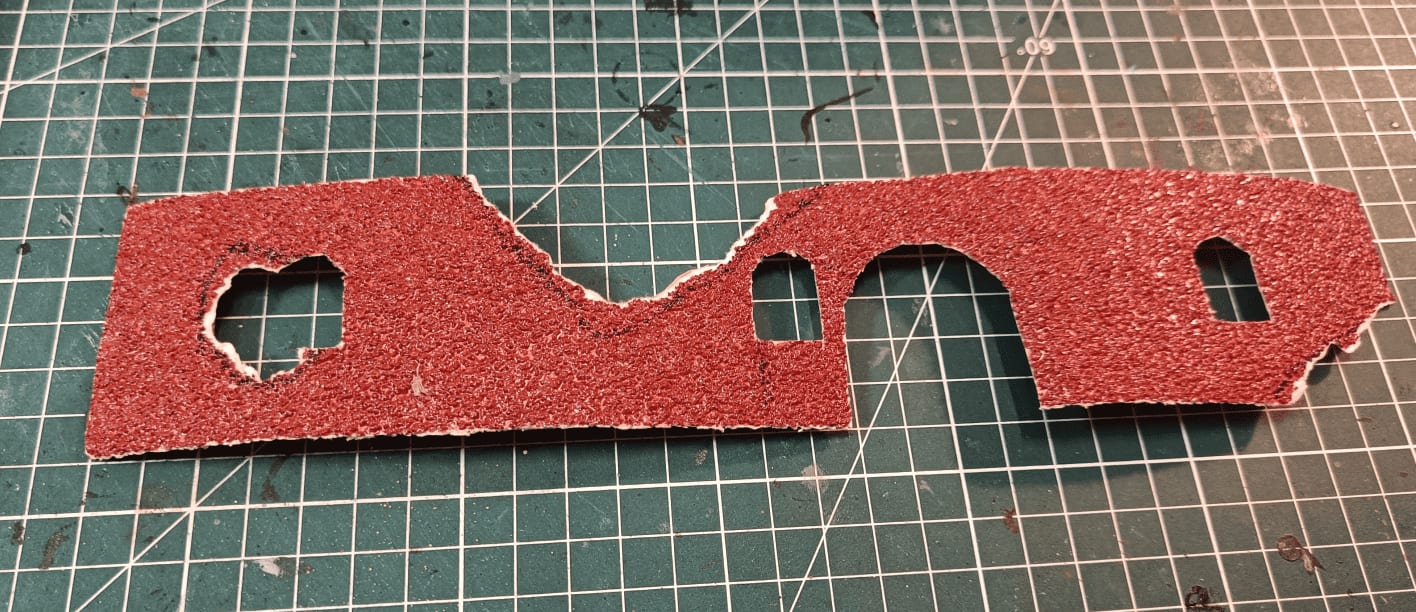
I used sandpaper as the base texture for the walls. I cut it to roughly wrap around the house, leaving space for windows and doors, and tore out sections in other places to show the wall underneath. I flipped the sandpaper, positioned my doors and windows, traced the outline, then cut them out. Cutting sandpaper is hard on your fingers and destroys cutter blades very quickly.
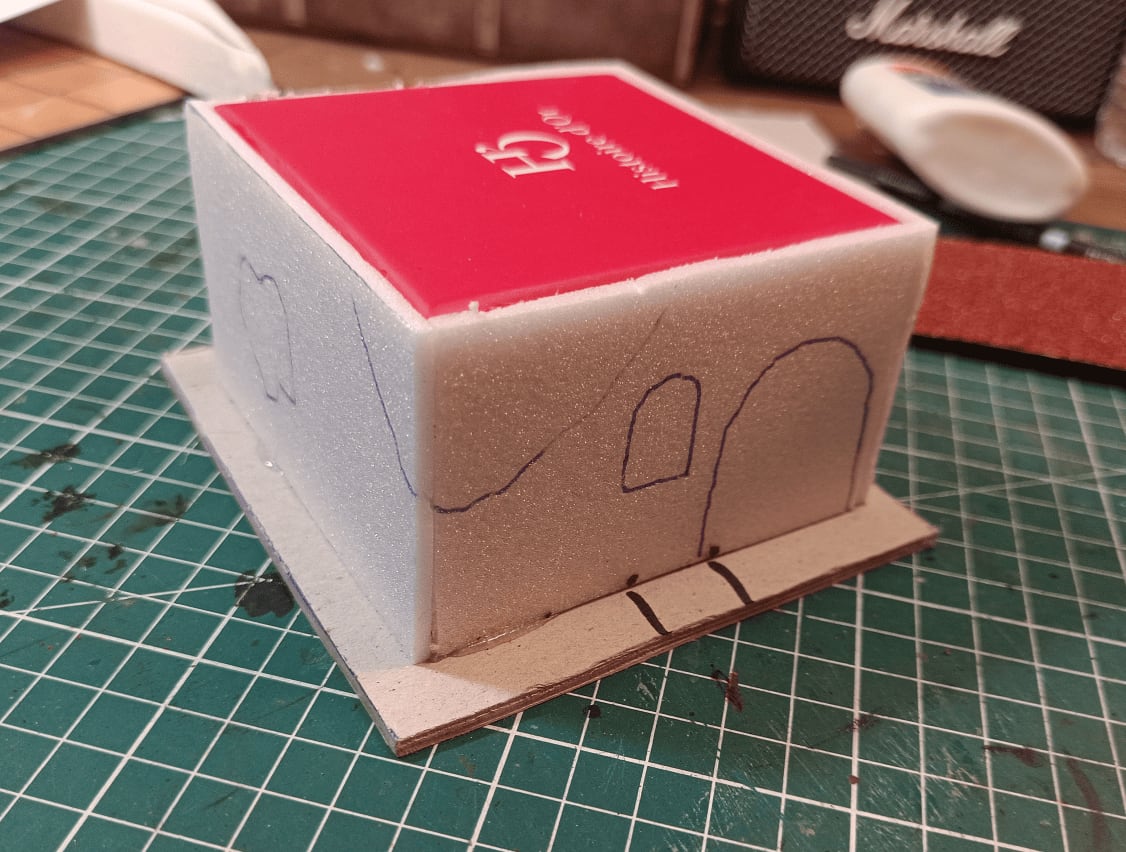
I transferred the holes from my template to the walls so I’d know where to carve the foam and where to draw bricks.
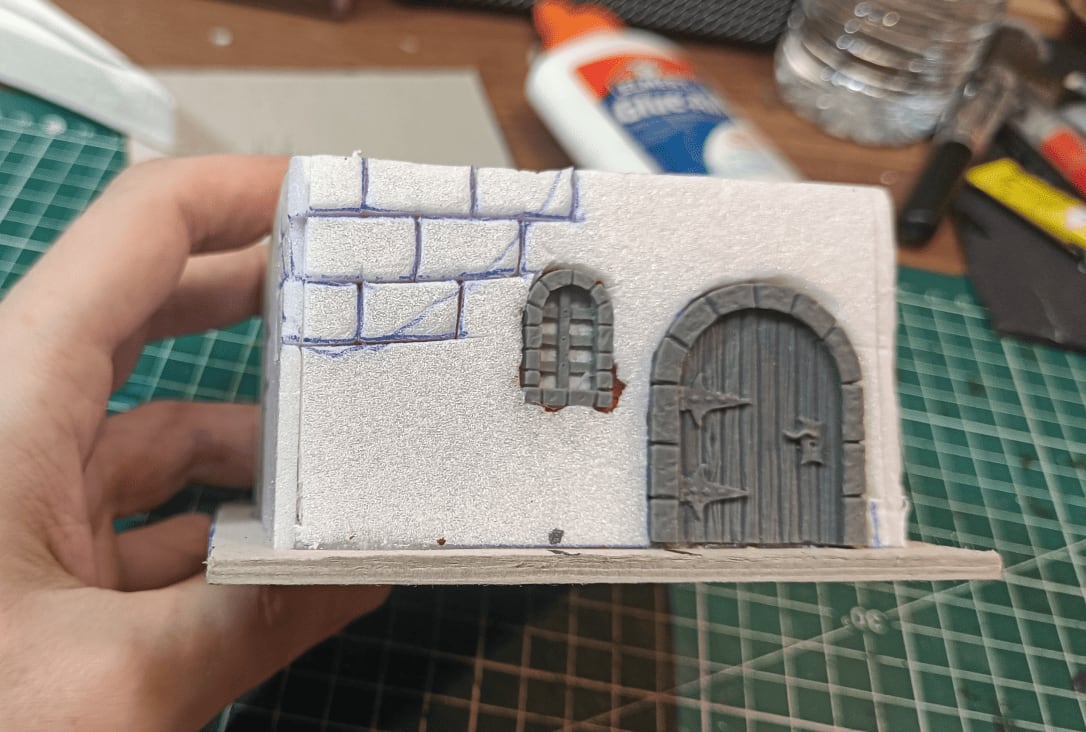
I carved out the foam in the necessary places, glued my doors and windows there, and added bricks in the areas visible through the wall holes. I went a bit beyond the holes to ensure all the bricks were properly formed.
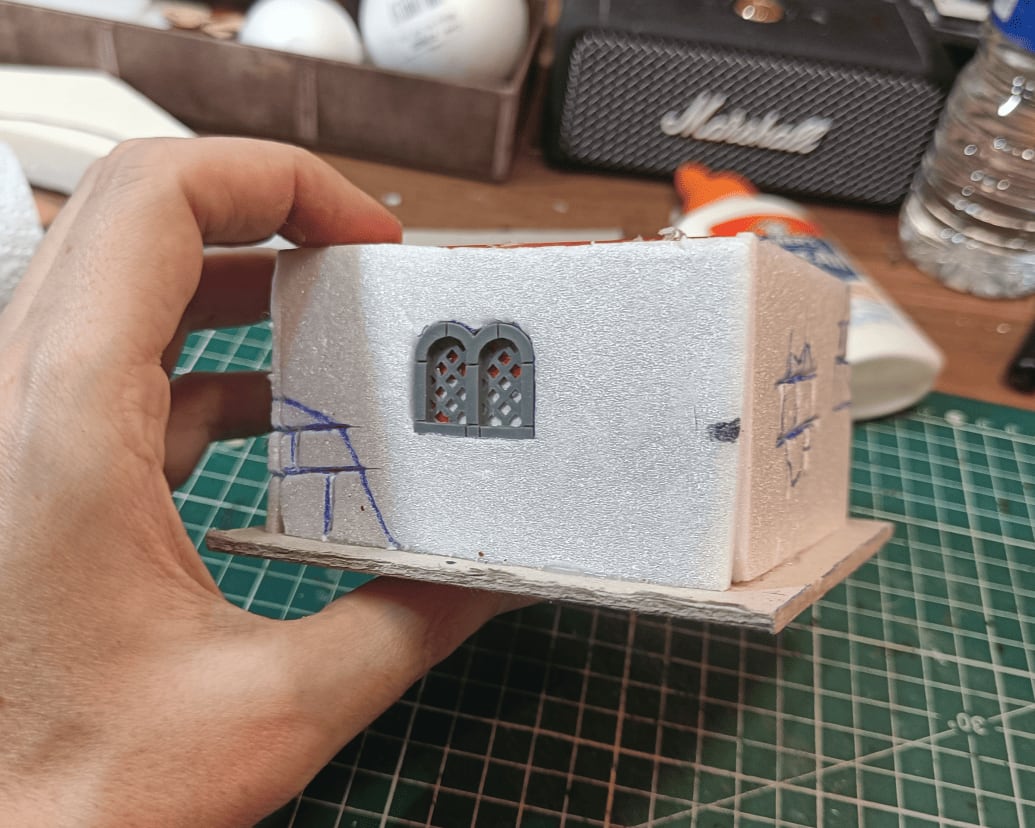
The back view shows windows on multiple sides, not just one.
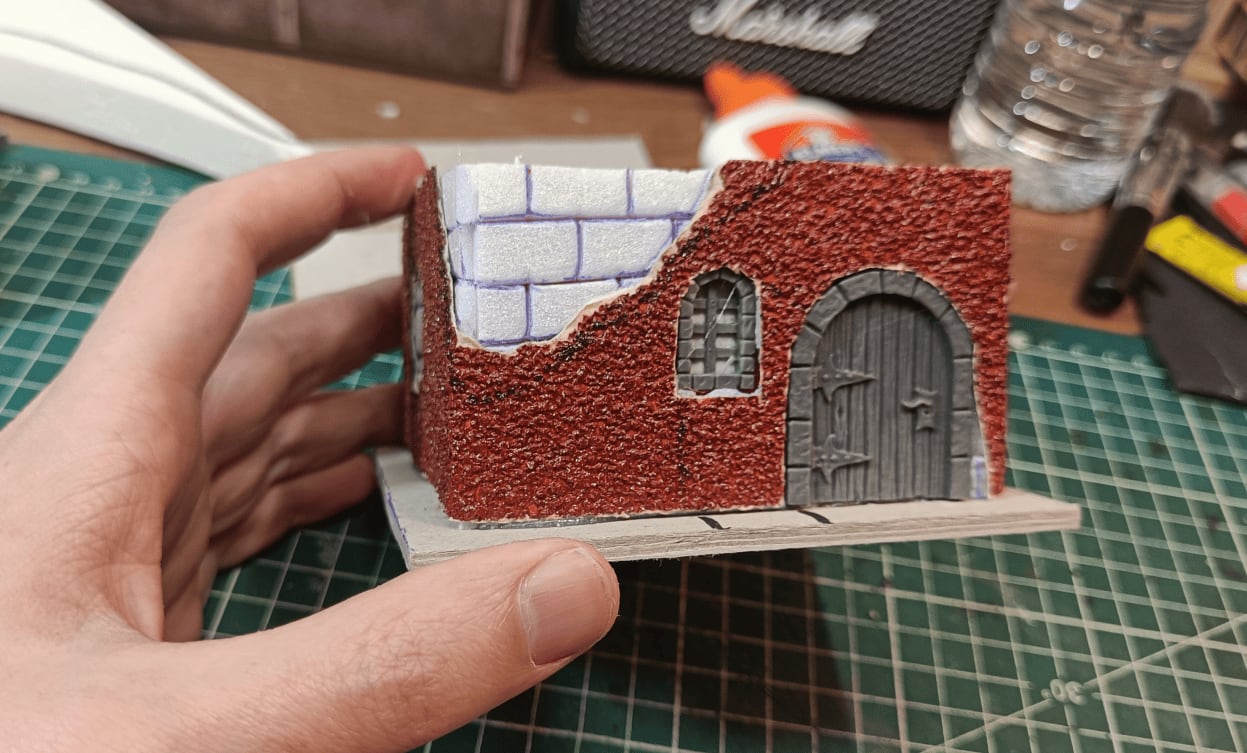
After gluing the sandpaper back over the walls, the structure starts taking shape.
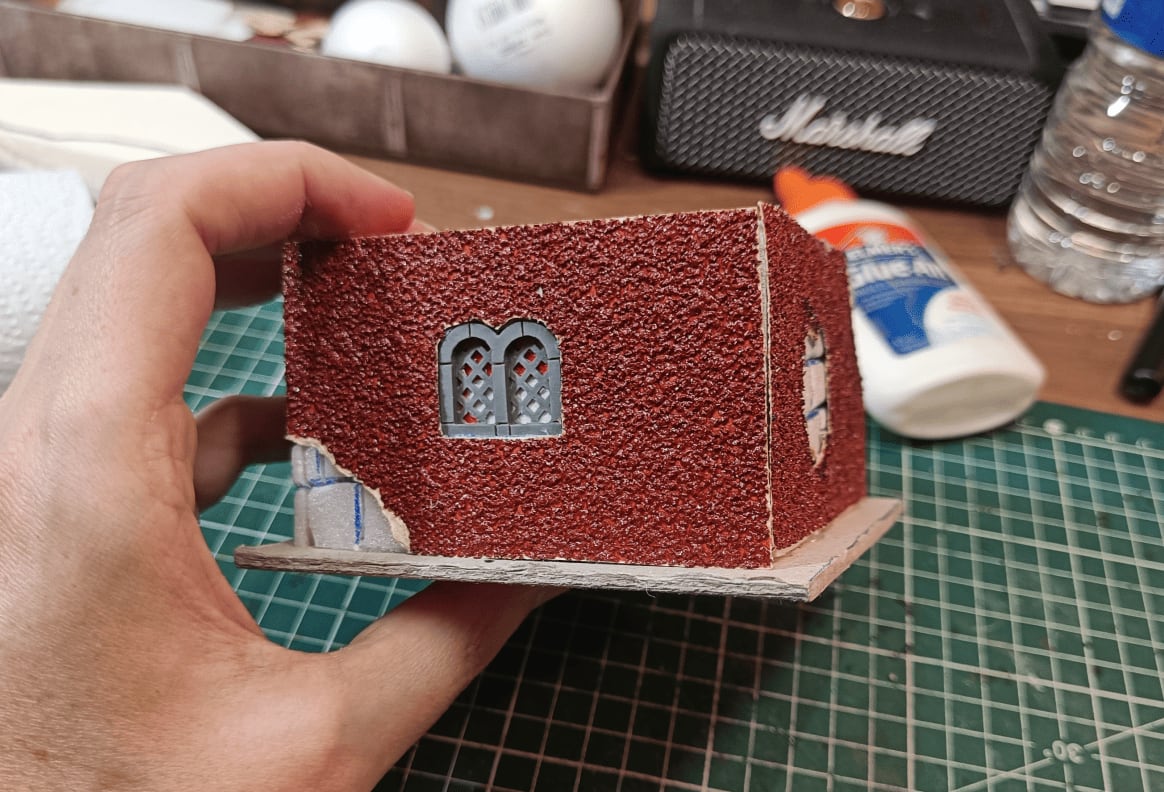
There’s an edge on the back where the sandpaper doesn’t meet properly, but I’ll hide that flaw later with texture.
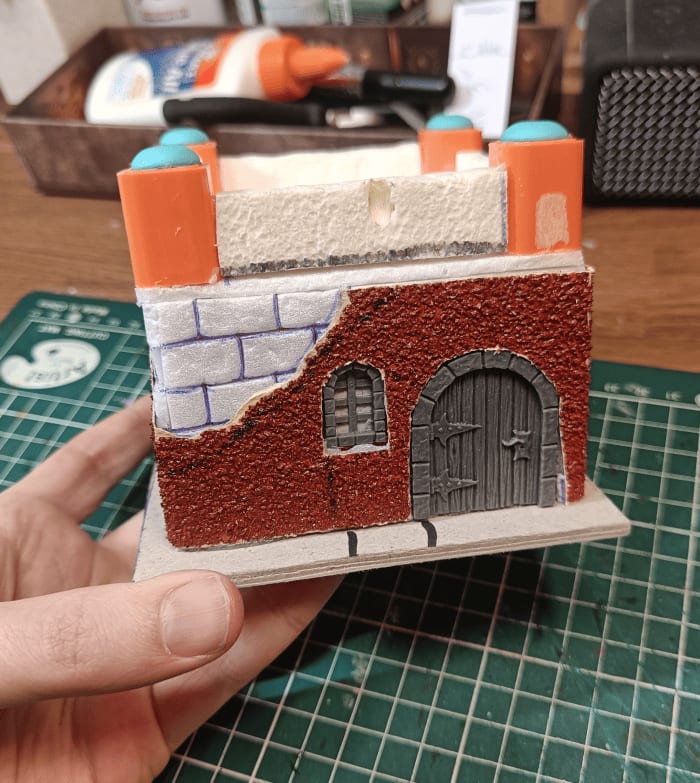
I tried adding a small parapet wall on top because the roof felt too flat. I used homeopathic medicine tubes with small elements added to create rounded domes. The scale ended up being wrong and too chunky. I found a much better solution on later houses.
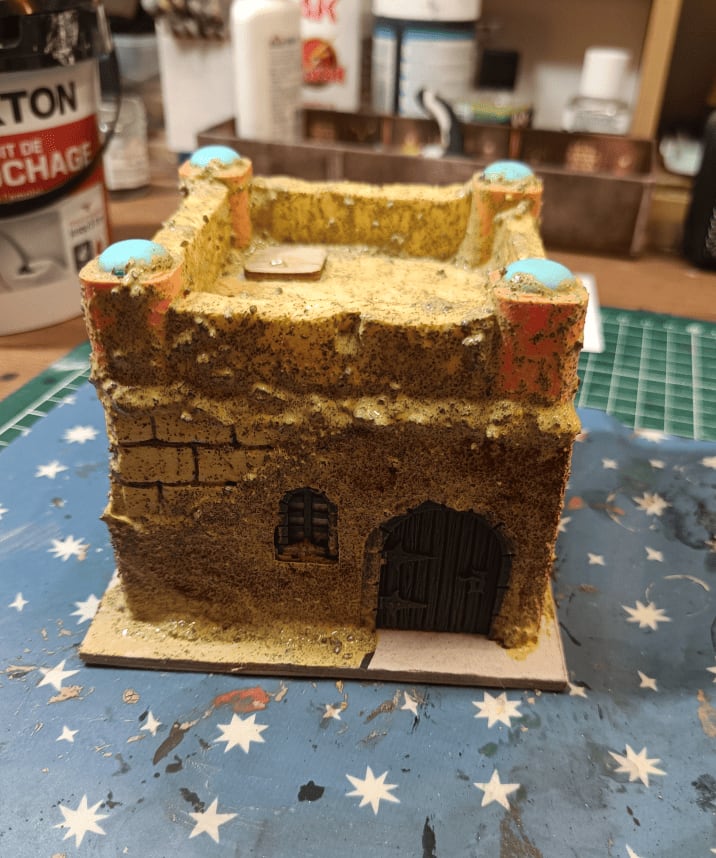
I applied two layers of texture: a mix of sand and glue with a bit of paint for tinting so I could see where it was applied. This adds texture everywhere. I put thick amounts especially where there were gaps in my construction. I also realized I forgot to add a trapdoor on the roof, so I added it at this stage, but it would have been better to recess it into the roof rather than raising it above.
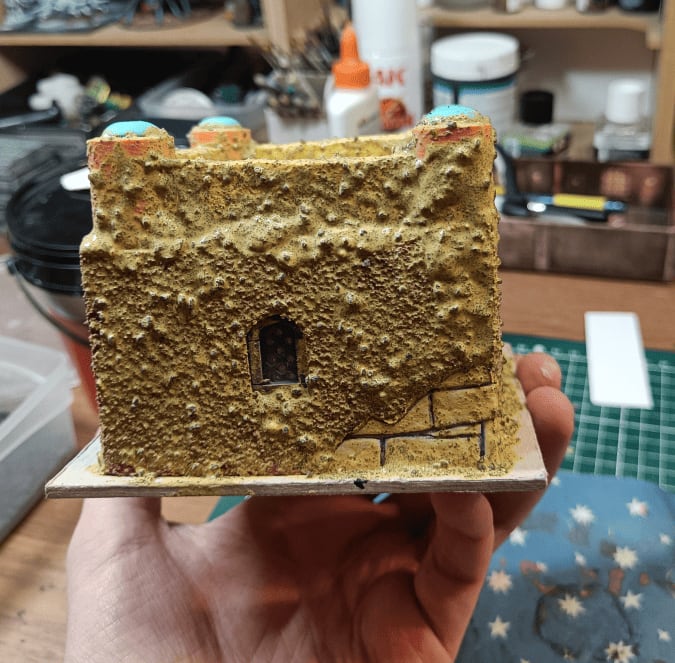
You can see the areas where I layered lots of texture to smooth the transition between different materials.
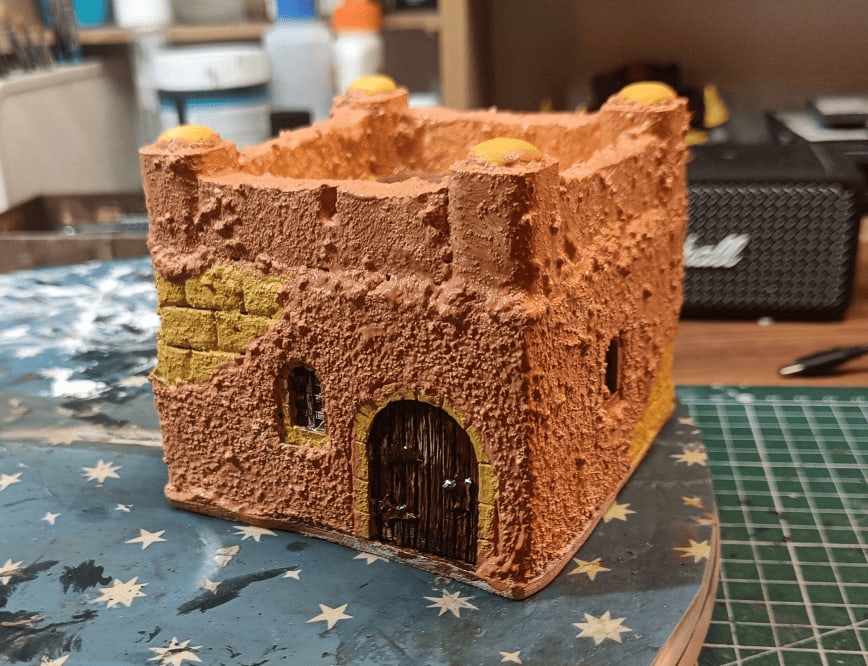
This was after I started painting. I chose colors leaning too much toward orange-pink, and the result wasn’t great. I improved the paint job on the second batch.
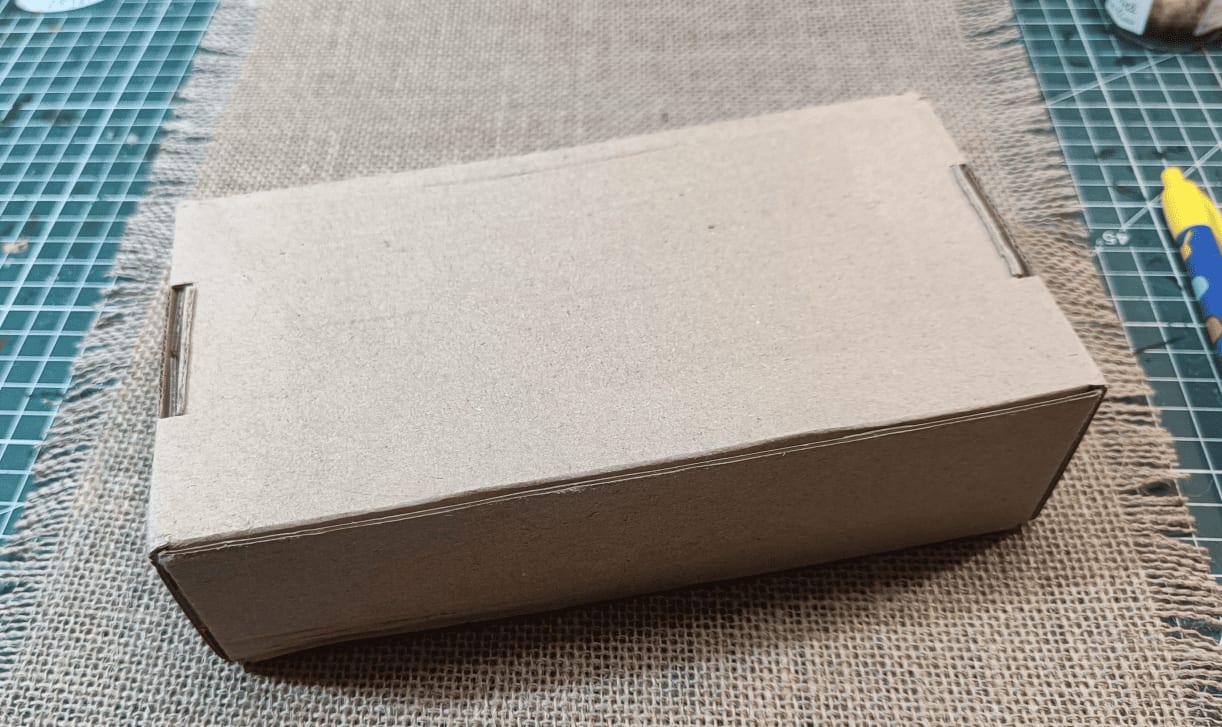
For another building, I wanted to make a longer structure, so I used a large cardboard box as the base.
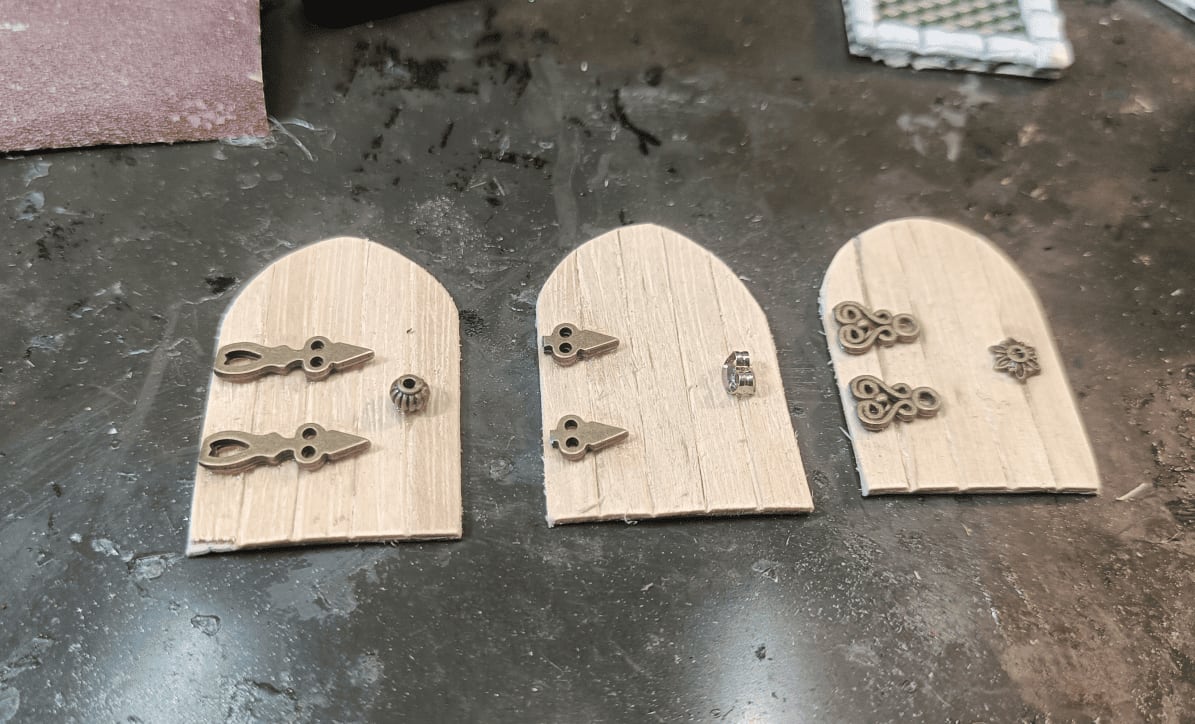
I made several doors myself because I realized I wouldn’t have enough of the pre-printed ones I had.
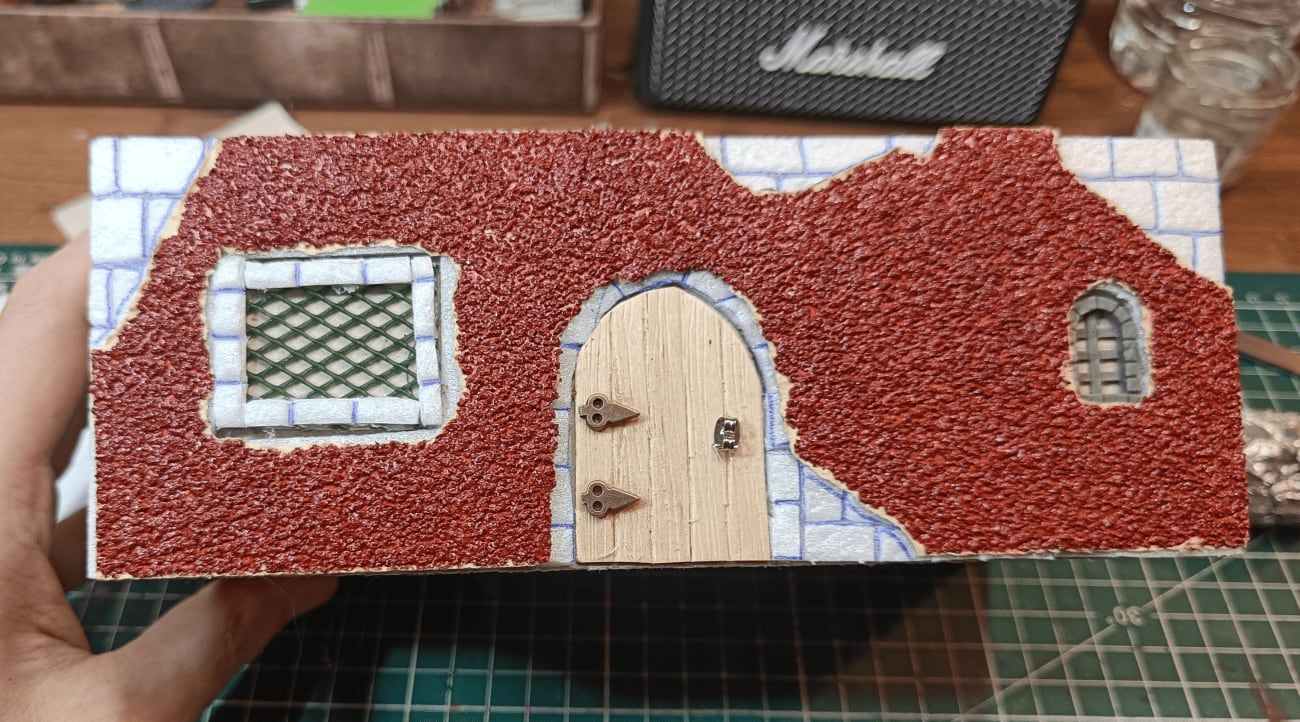
I glued the foam perimeter around this one. There’s a specific sequence of steps that makes construction easy: glue the foam first, flip the sandpaper and trace where doors and windows go, cut those out, then place it on the foam to mark where to carve. I messed up the order here. I sometimes did things out of order and glued doors in the wrong spots, but these materials are forgiving. I learned from watching Trent Holbrook’s Miscast videos on YouTube that crafting is all about solving problems and hiding mistakes. Wyloch says the same thing. You try, you mess up, it’s not perfect, but the final result looks good.
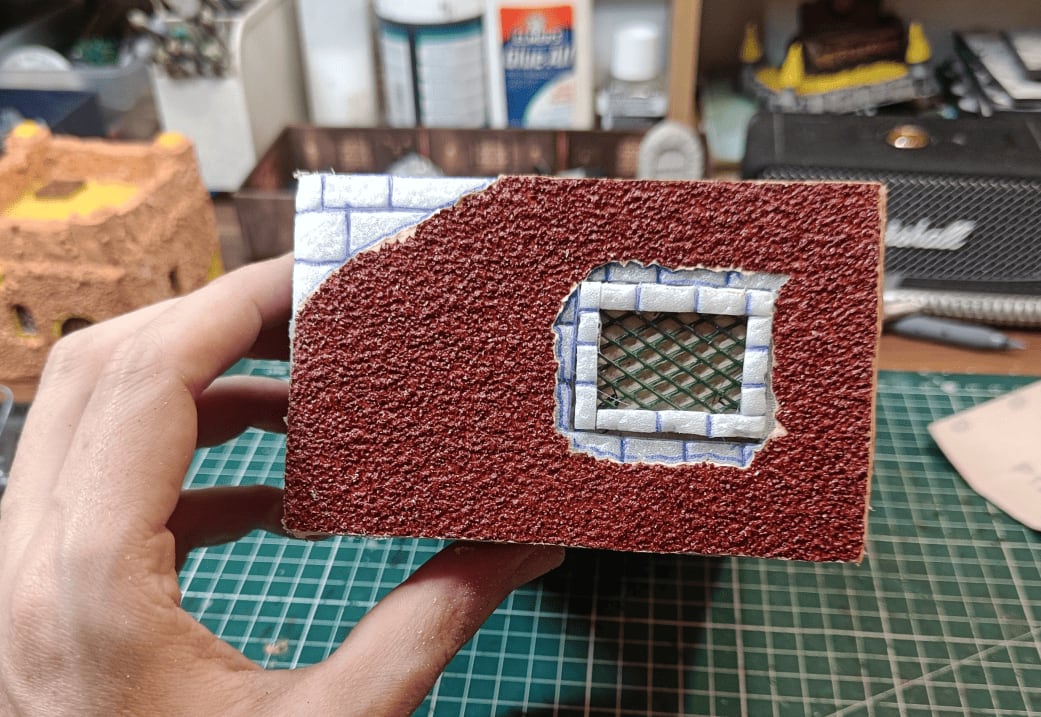
The back side. I didn’t plan to tear away so much around the window, but I had to correct a mistake with my dimensions. Like I said, the final result will be fine.
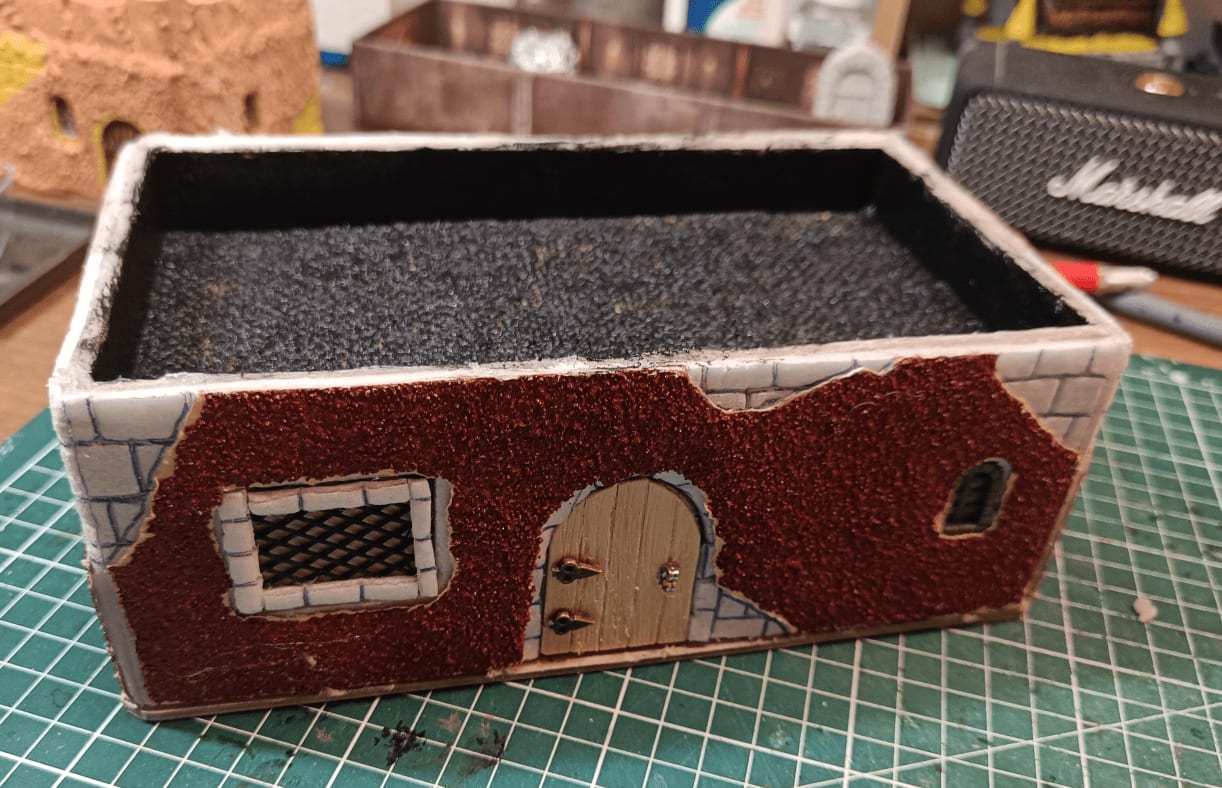
I did a much better job with the parapet on this one. I built it into the system from the start by gluing cardboard planks (the same thickness as the base) on each side, making them slightly larger than the box. This automatically creates a parapet. Before gluing those pieces, I glued a small woven mat on top to create the roof surface. Since I glued it first and cut what overhung, it fits perfectly at the right height.
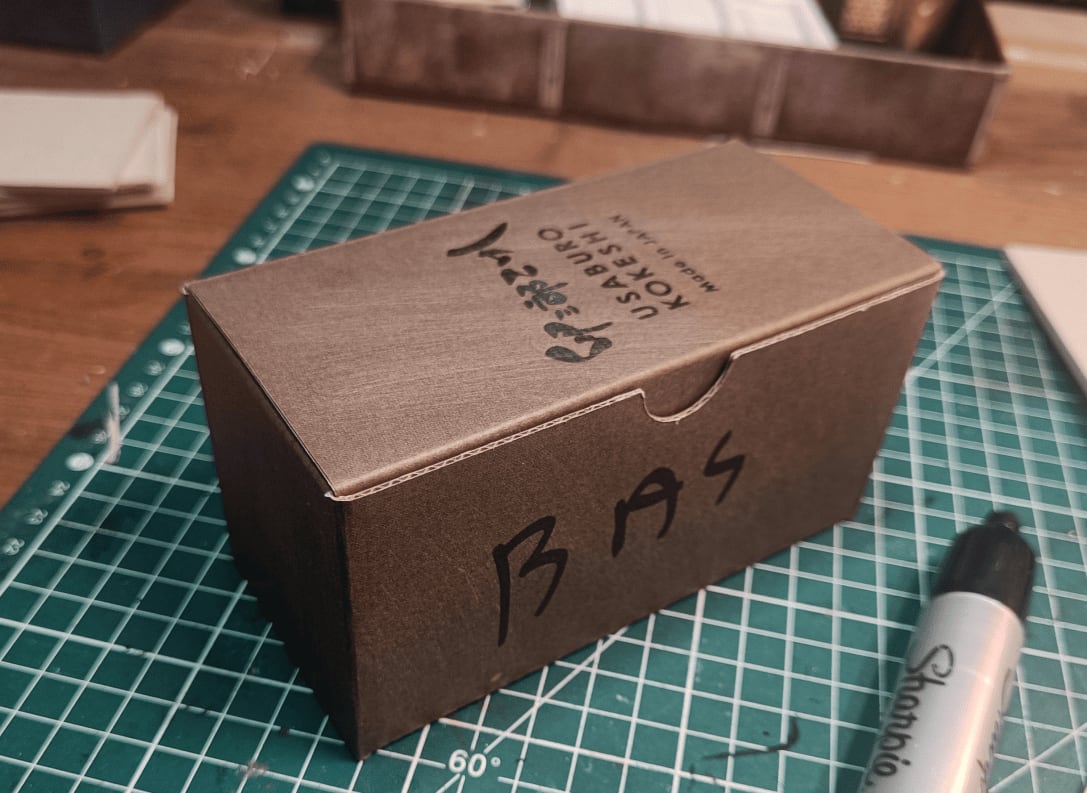
Another house I made using this box as the base material. What’s nice about this construction system is you take a box that gives you roughly the dimensions you want, glue walls around it, and start texturing.
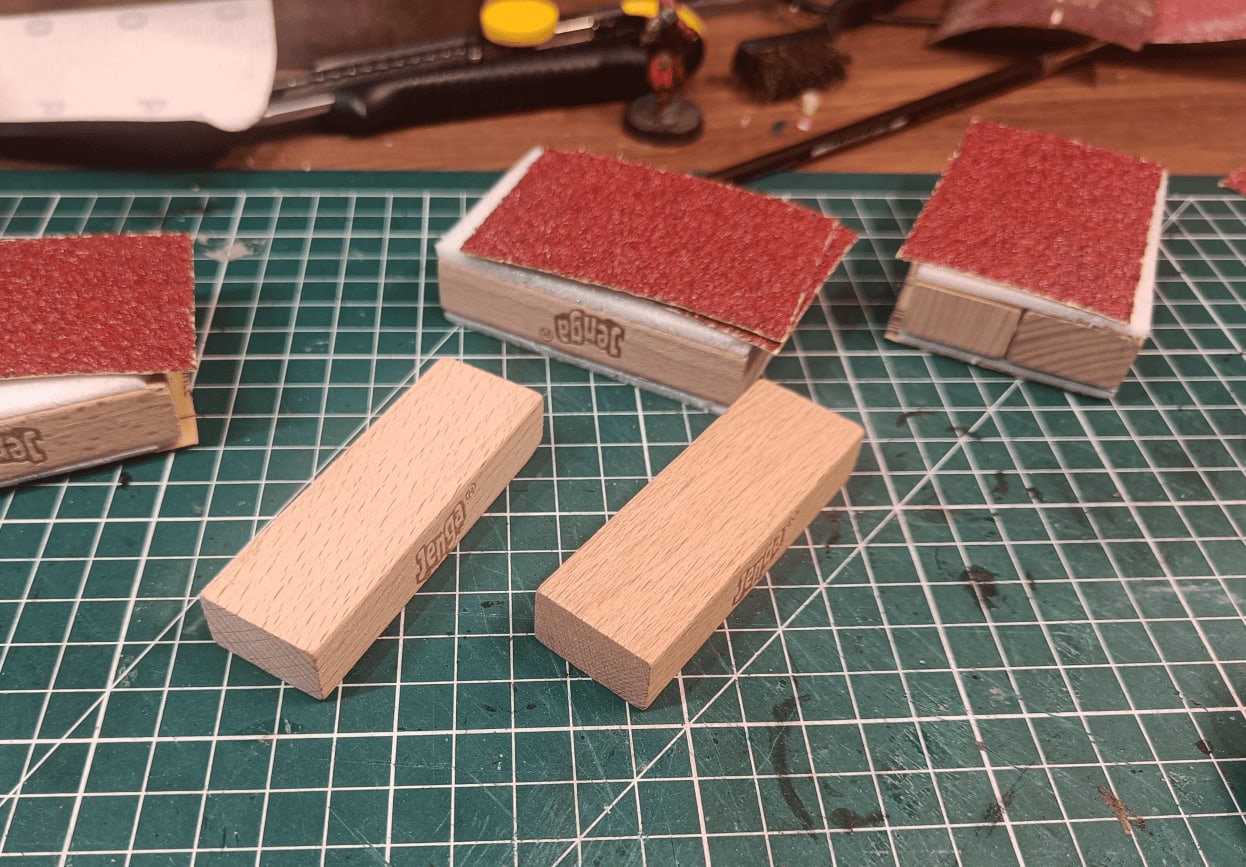
I wanted houses, but I also wanted small walls to place around to simulate alleyways. I took Jenga blocks and stacked them so they’re heavy and have weight. I used the same technique on the sides: glued foam, added sandpaper on top, and tore it away to show the wall underneath. Same logic, and using elements heavy enough so the walls don’t fall over during play.
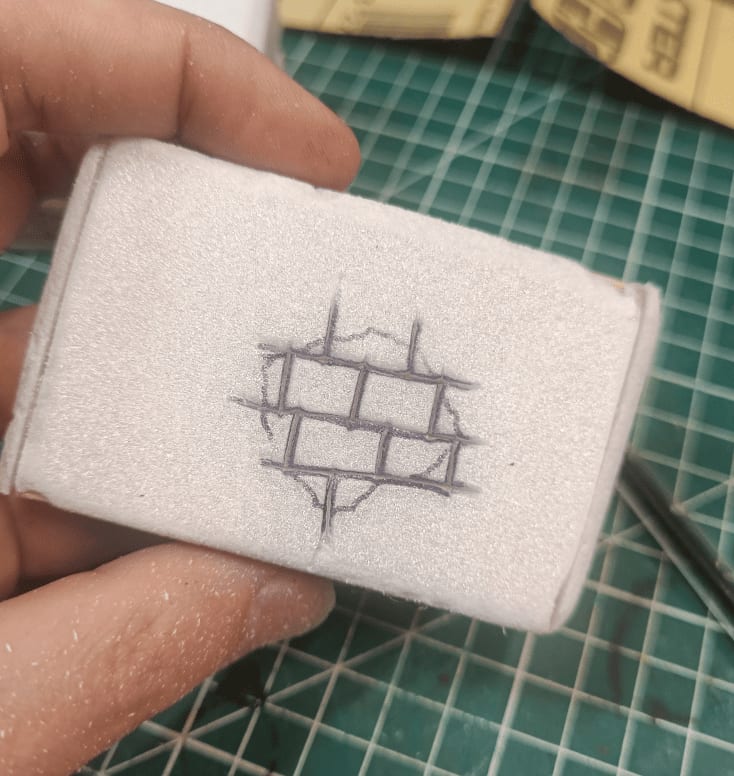
The wall holes I make to show the bricks visible through the gaps.
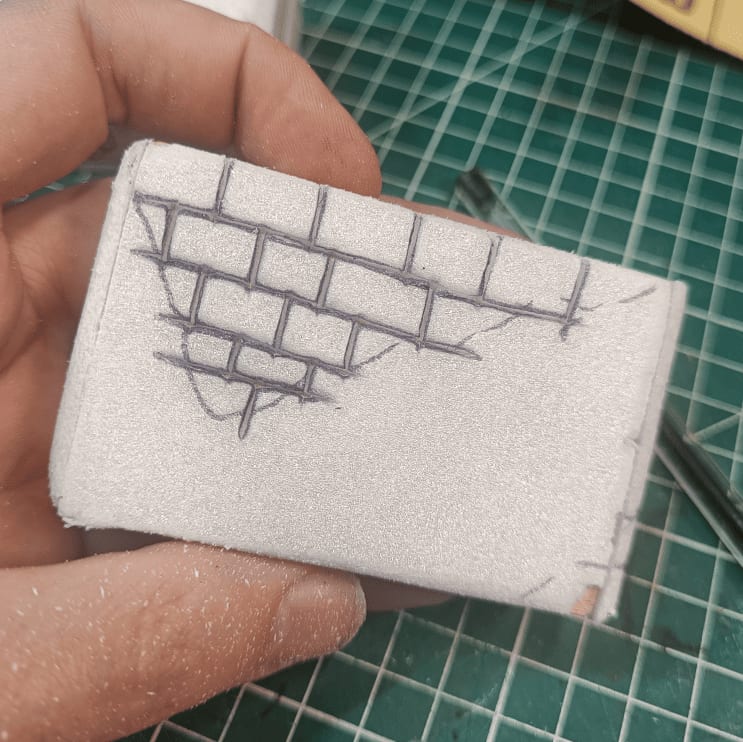
Sometimes I just make holes in the center, or I tear pieces as if it’s a bit broken away at the top or bottom.
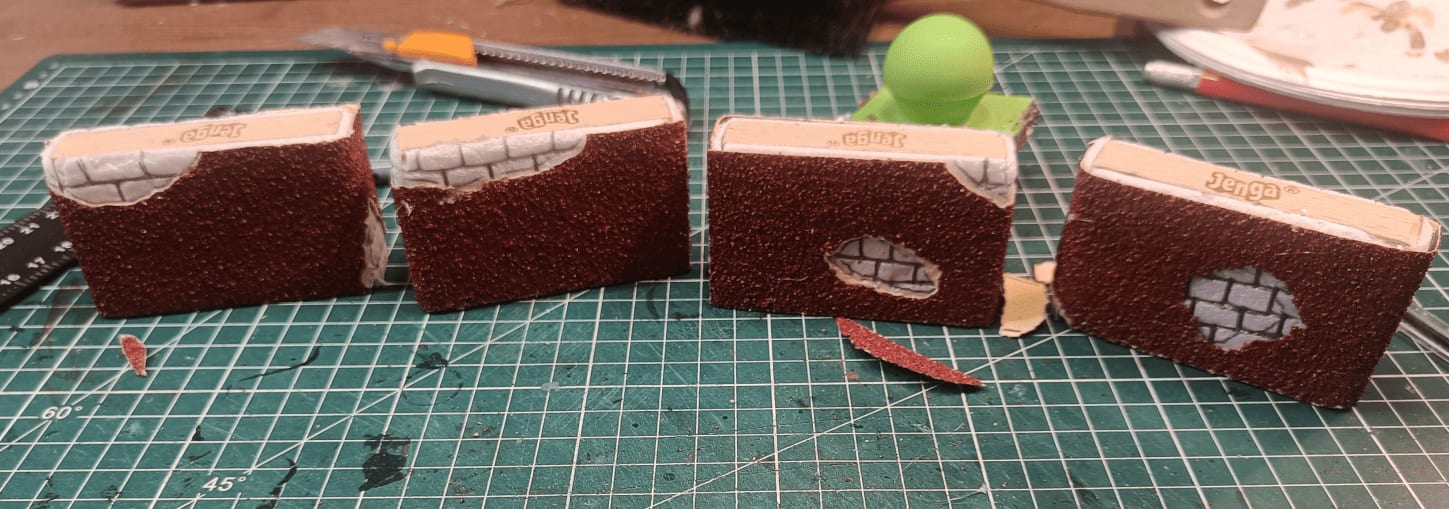
The different walls almost ready to be painted. Two stacked Jenga blocks with foam on top, and sandpaper with holes over that foam. Under the holes, I textured the walls again.
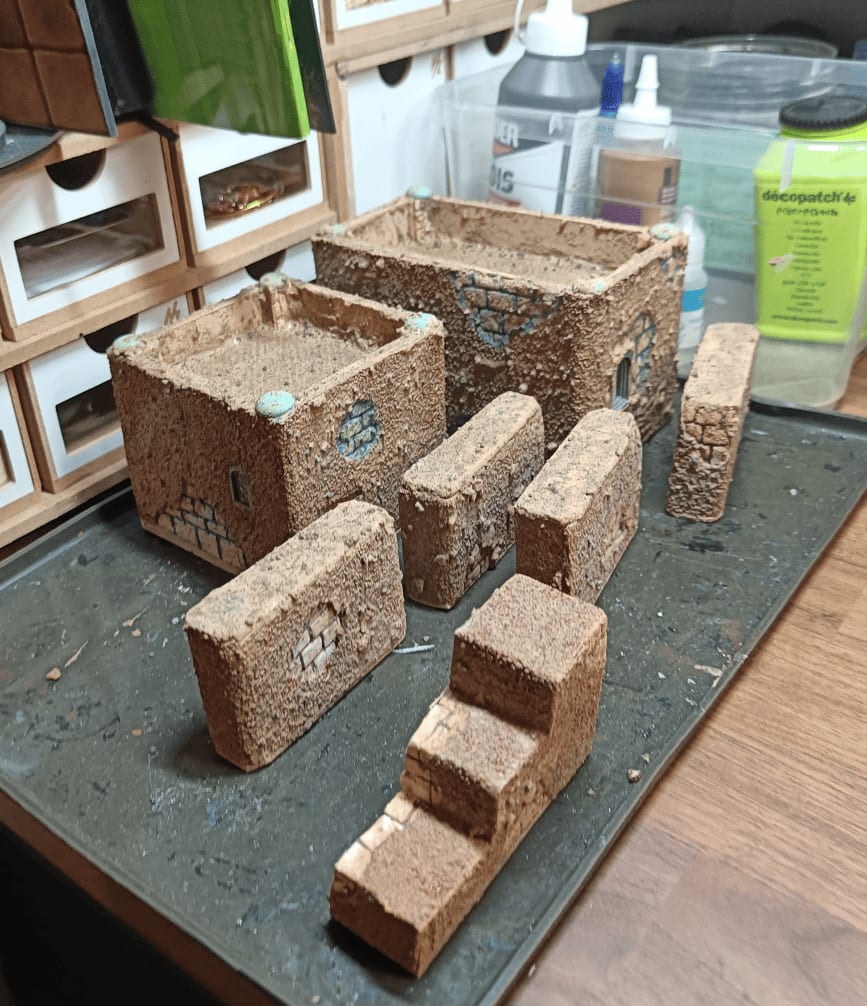
Waiting to be painted. There’s a bit of blue showing because I traced the brick lines with a blue pen, and when I applied the watery paint over it, the blue bled everywhere. It doesn’t show too much in the end because I painted over it with darker colors, but I learned to trace my lines with a color in the same tones as the final paint. If I were to do it again, I’d use a brown pencil.
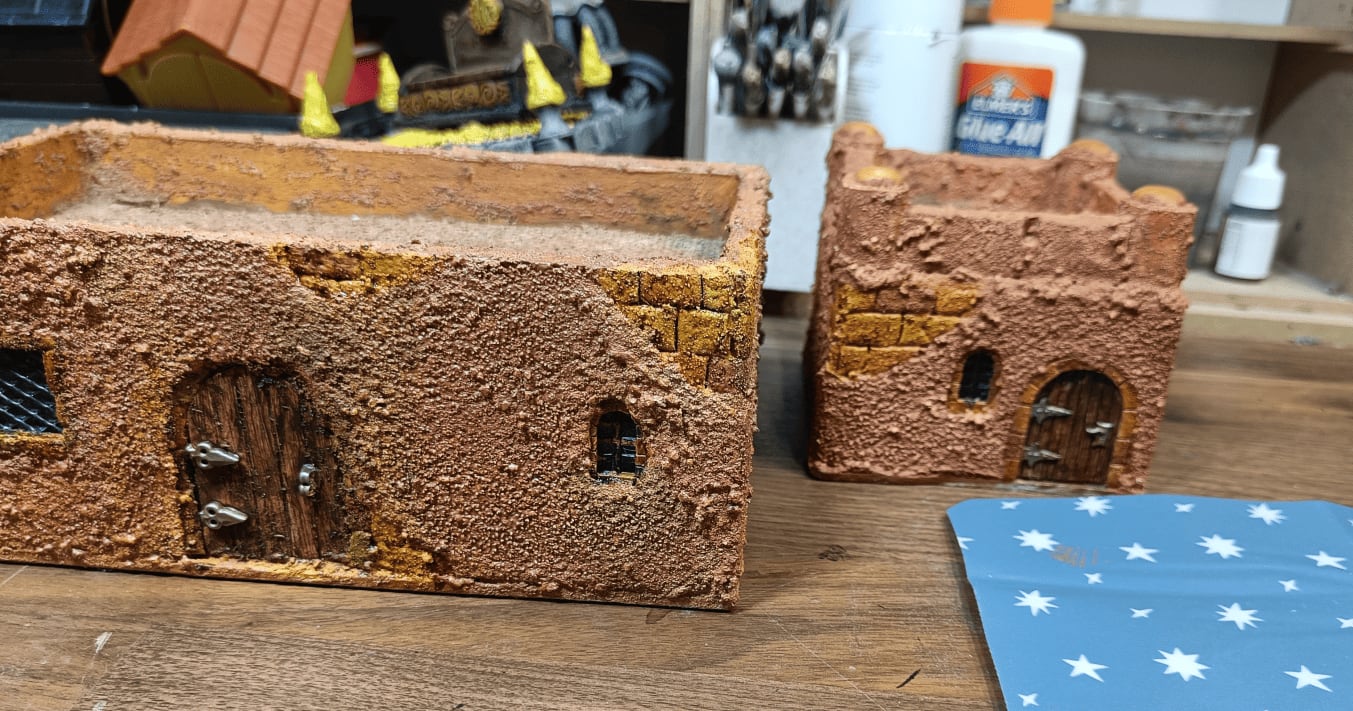
My first buildings in progress. It looks a bit better once I drybrushed and added washes over it. Less pink, but still quite pink.
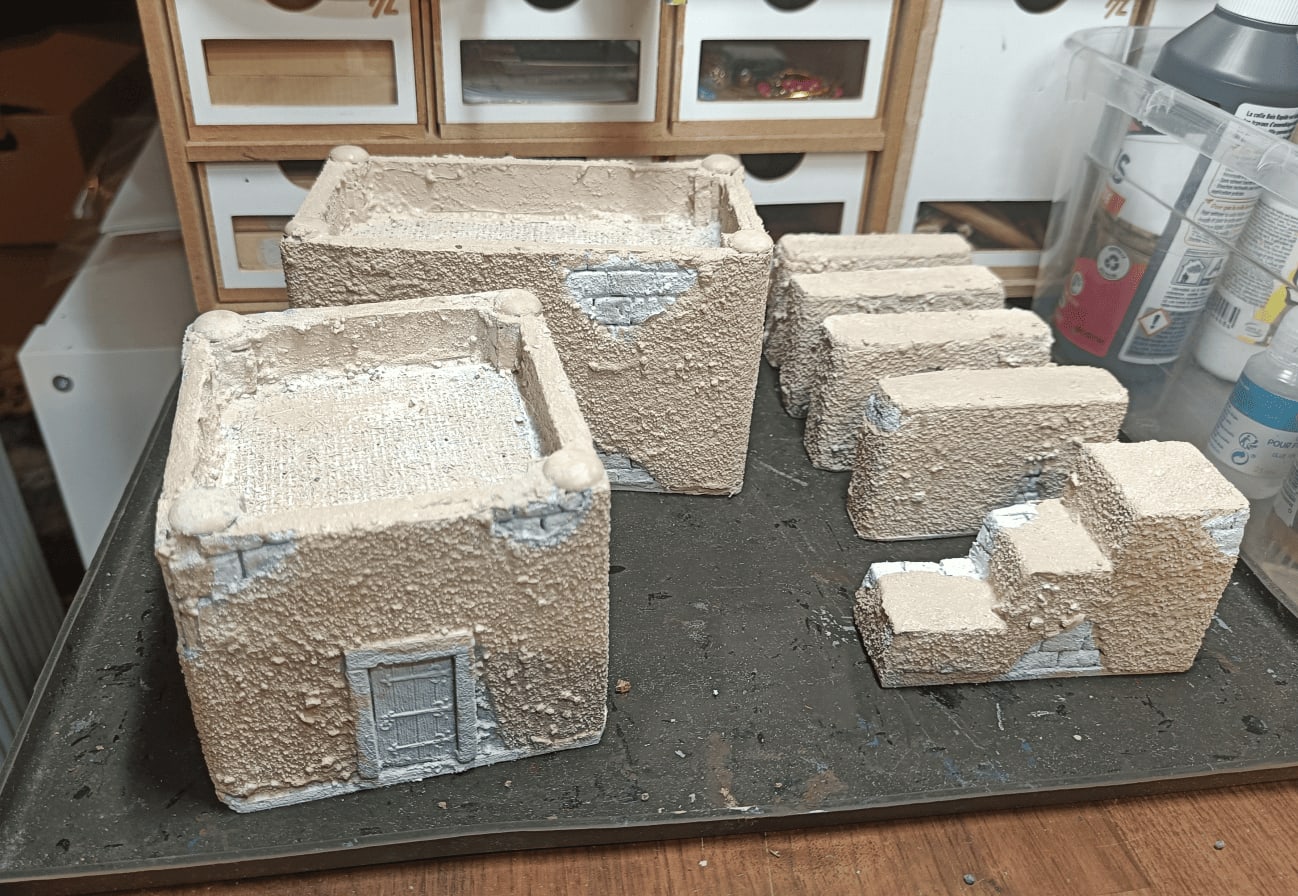
I changed the color scheme here. After doing the black mod podge, I think I applied a white primer over everything to make it perfectly white so my terrain would be very bright. Then I painted with a tan color for all the plaster and left the rest white. Then I painted with a yellowish ochre for the stone and small details.
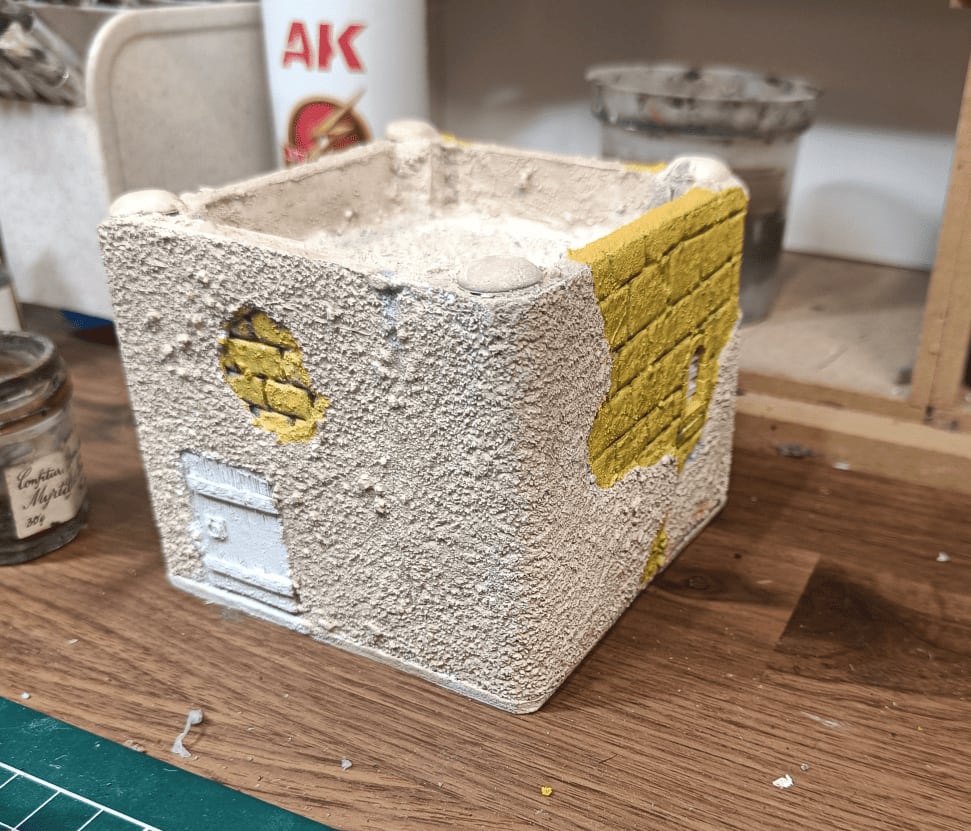
You can see where I painted all the small details in yellow.
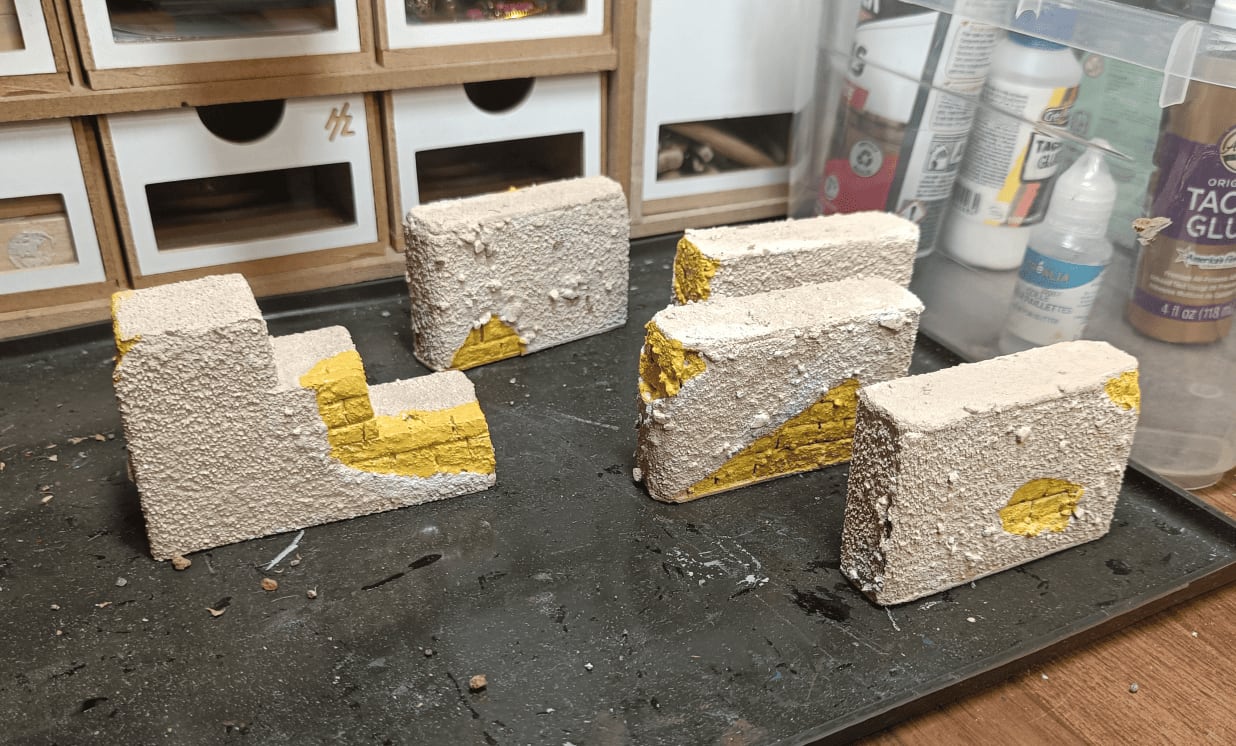
Same logic applied to the wall, and I also made a staircase. The staircase was cut directly from foam and isn’t made from Jenga blocks like the walls. To give it some weight, I hammered nails into the bottom.
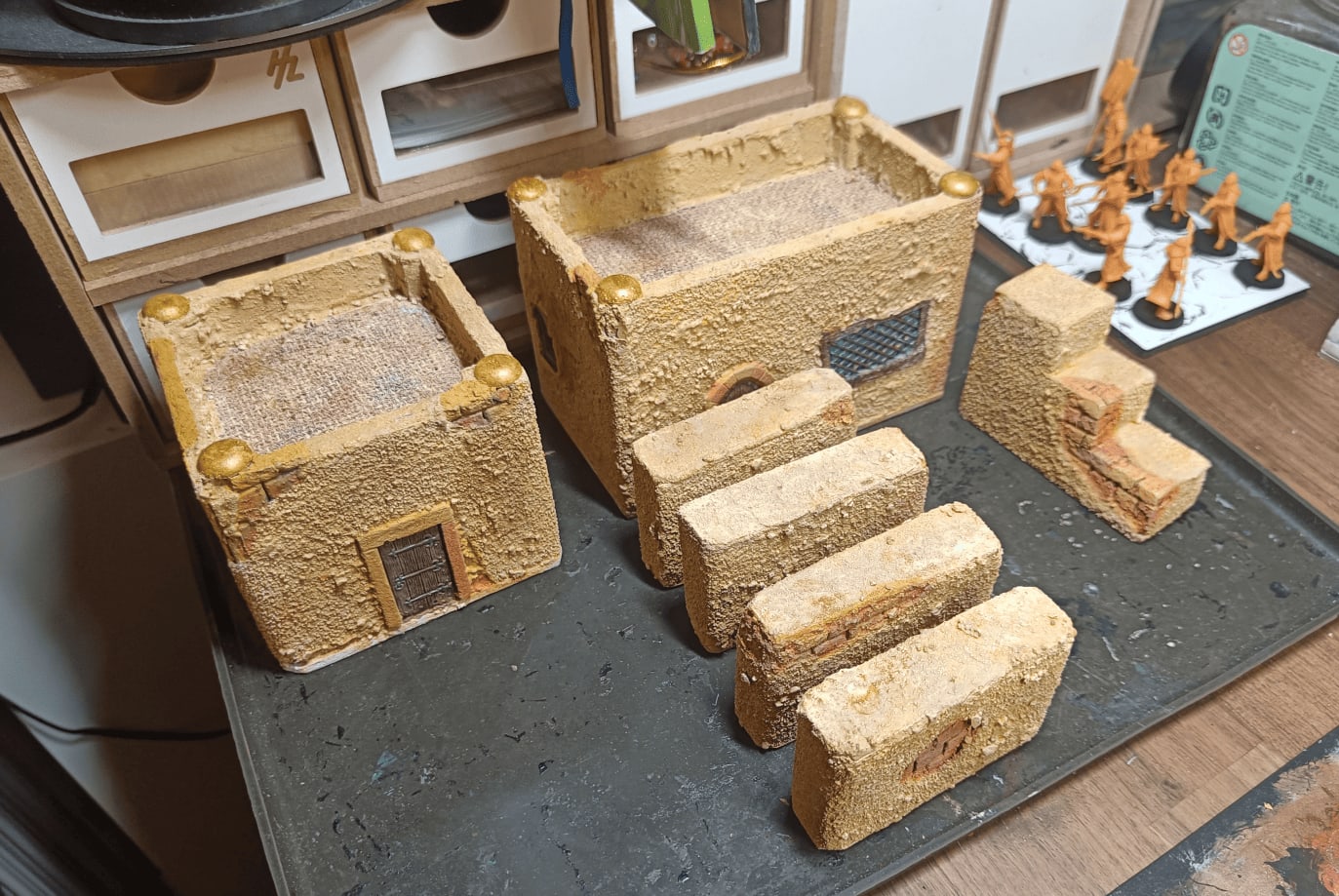
Once it starts getting painted, it looks exactly like what I wanted. I painted individual bricks in different colors to add variety, added washes over it, drybrushed again. Lots of techniques to give variety and diversity to the large flat colors, and it works really well.
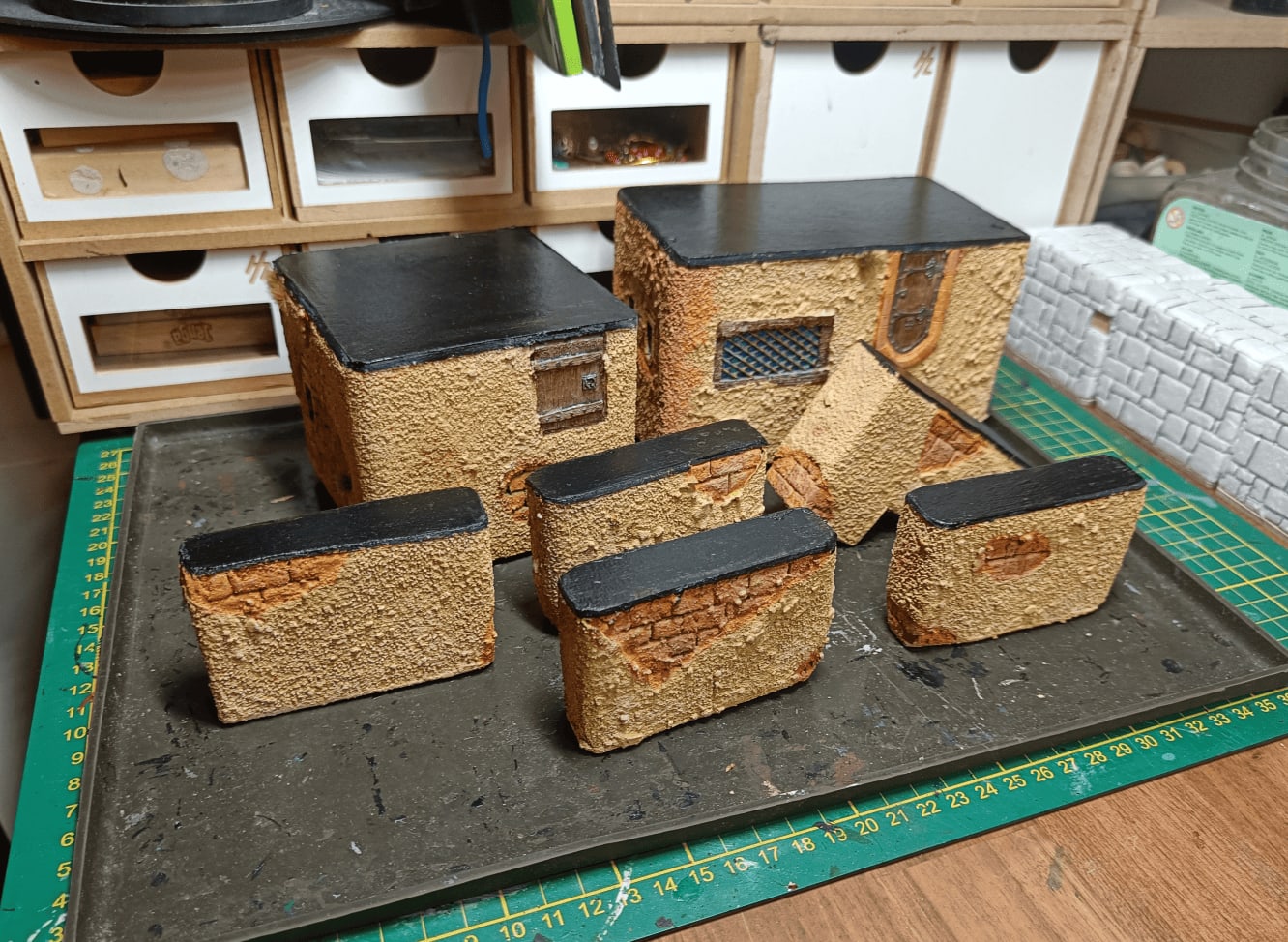
Painting the bottom has become my way of marking a project as finished. Once I’ve painted the bottom black, the project is done and ready to play with. It just needs to be varnished. It looks better with a black bottom when playing. You really get the impression these are terrain pieces, and you don’t see the cereal box cardboard they’re made from.
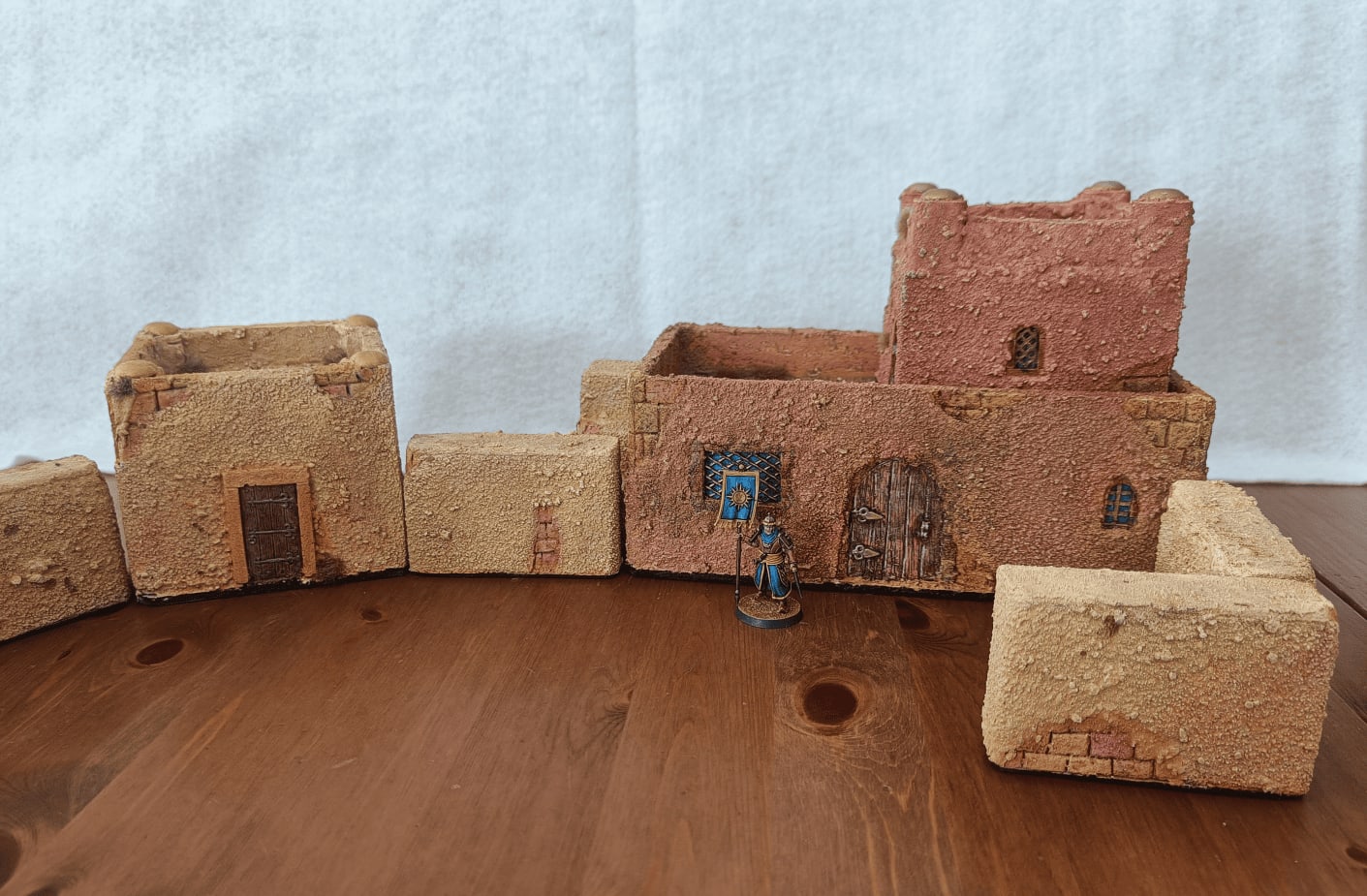
A small scene with a Qadira soldier. My pinkish houses aren’t really ugly, but they clash a bit with the rest. My other color scheme is much better. I did manage to make them modular in the sense that the small houses fit at the height of the large houses. I can either place them side by side or try to stack them to make slightly larger buildings.
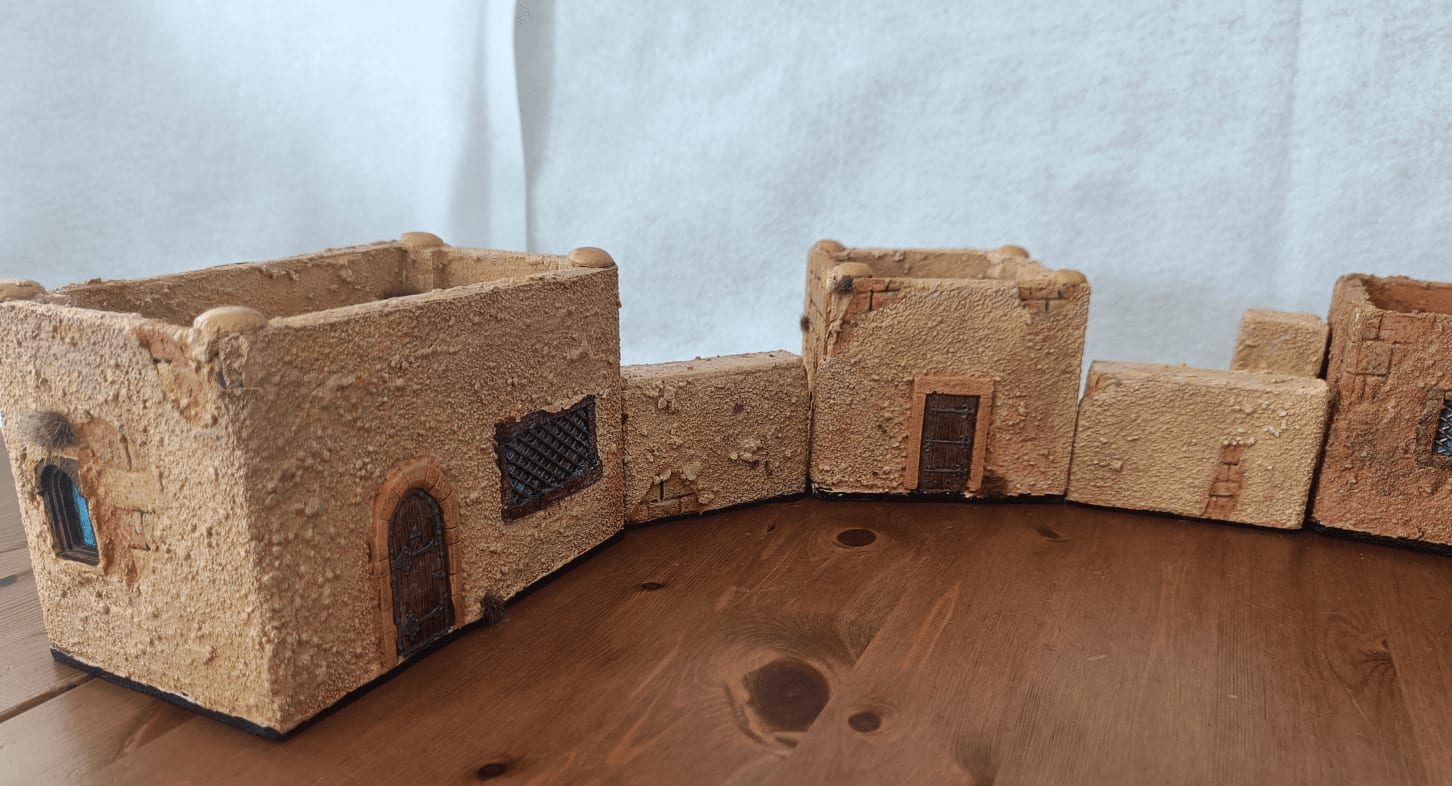
Another view with the walls separating different areas.
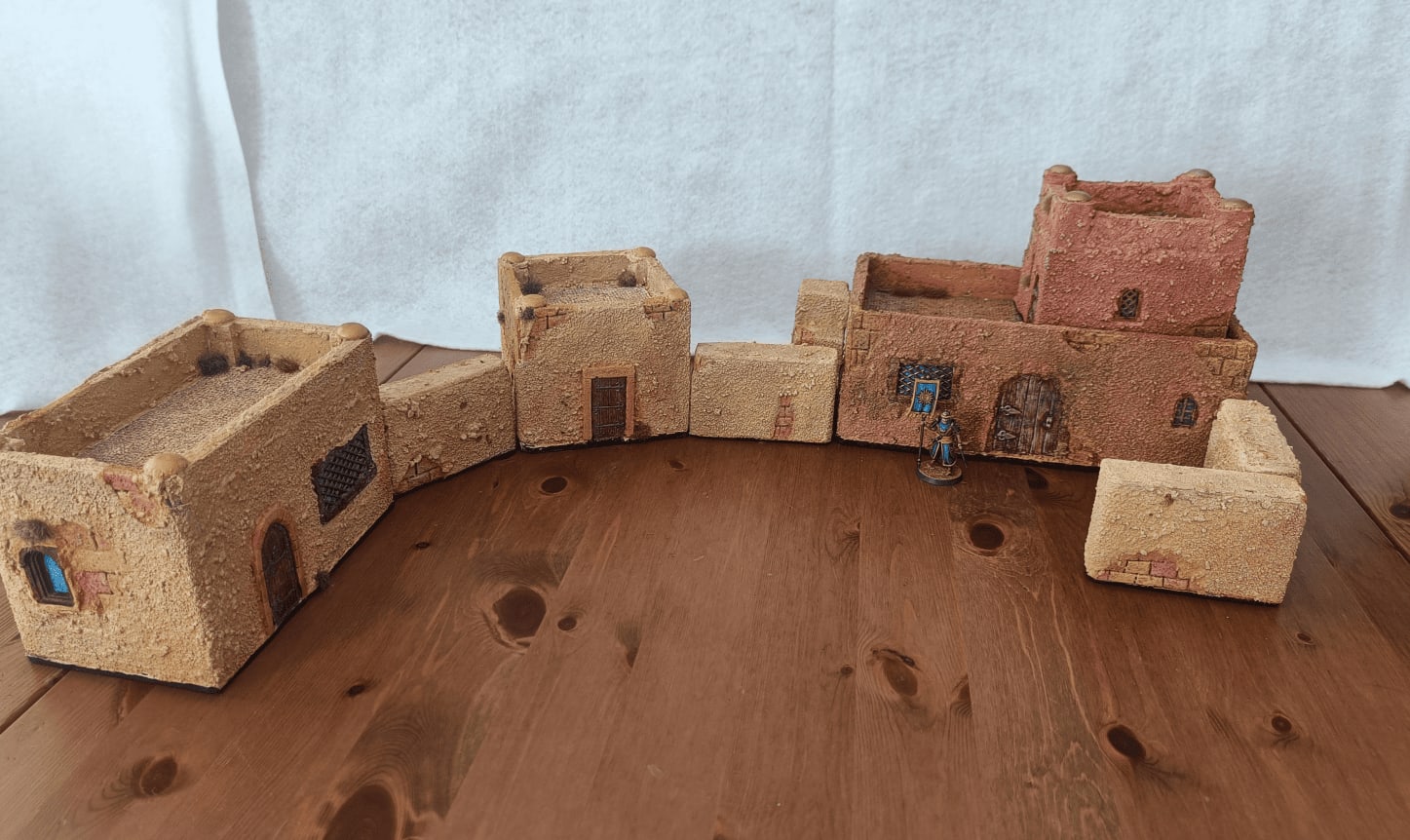
Another overview. I painted the windows in a very bright blue to simulate the sky reflecting on the glass.
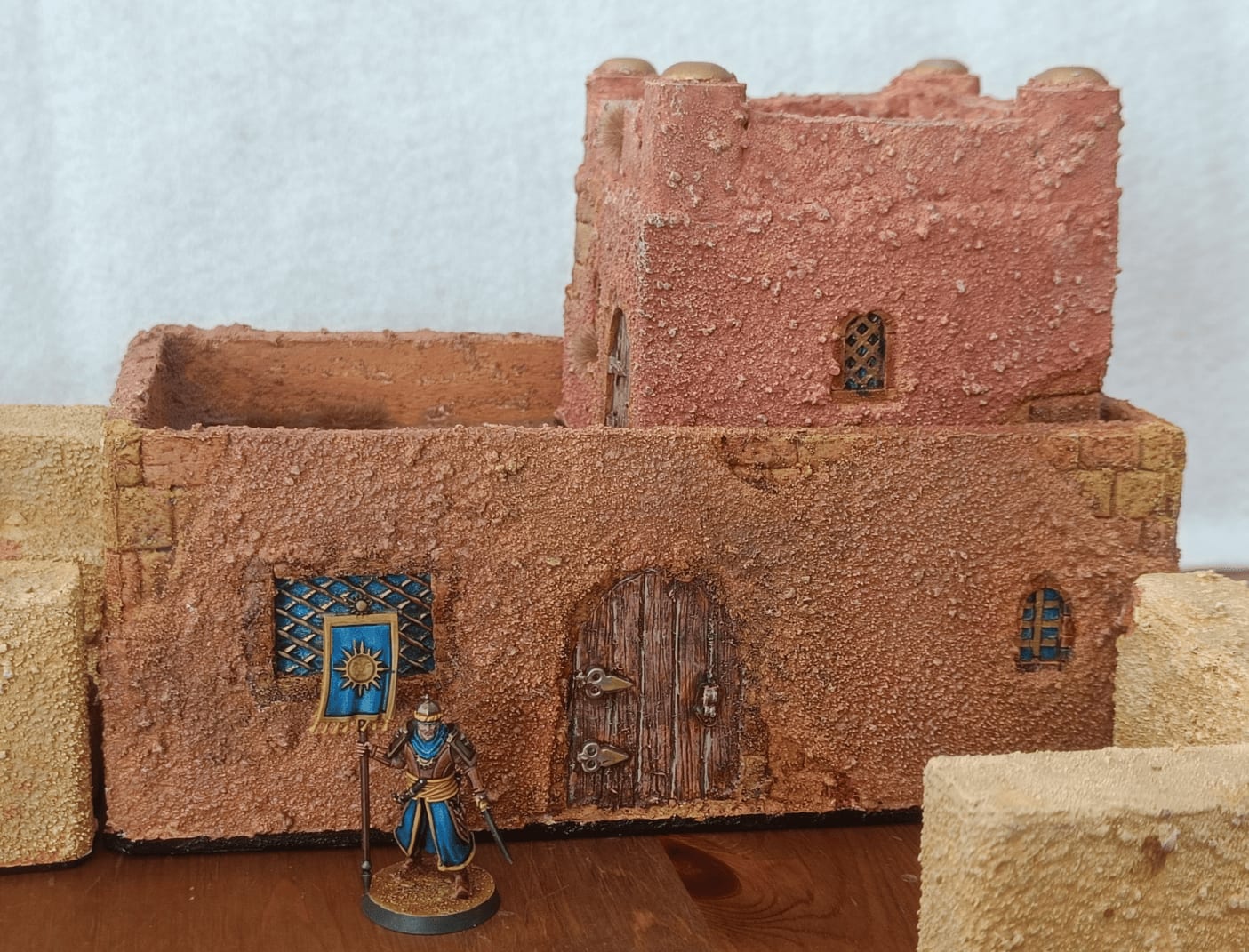
This house stacked. Don’t look too closely. If you look too closely, you can see the craft isn’t great, but it does the job.
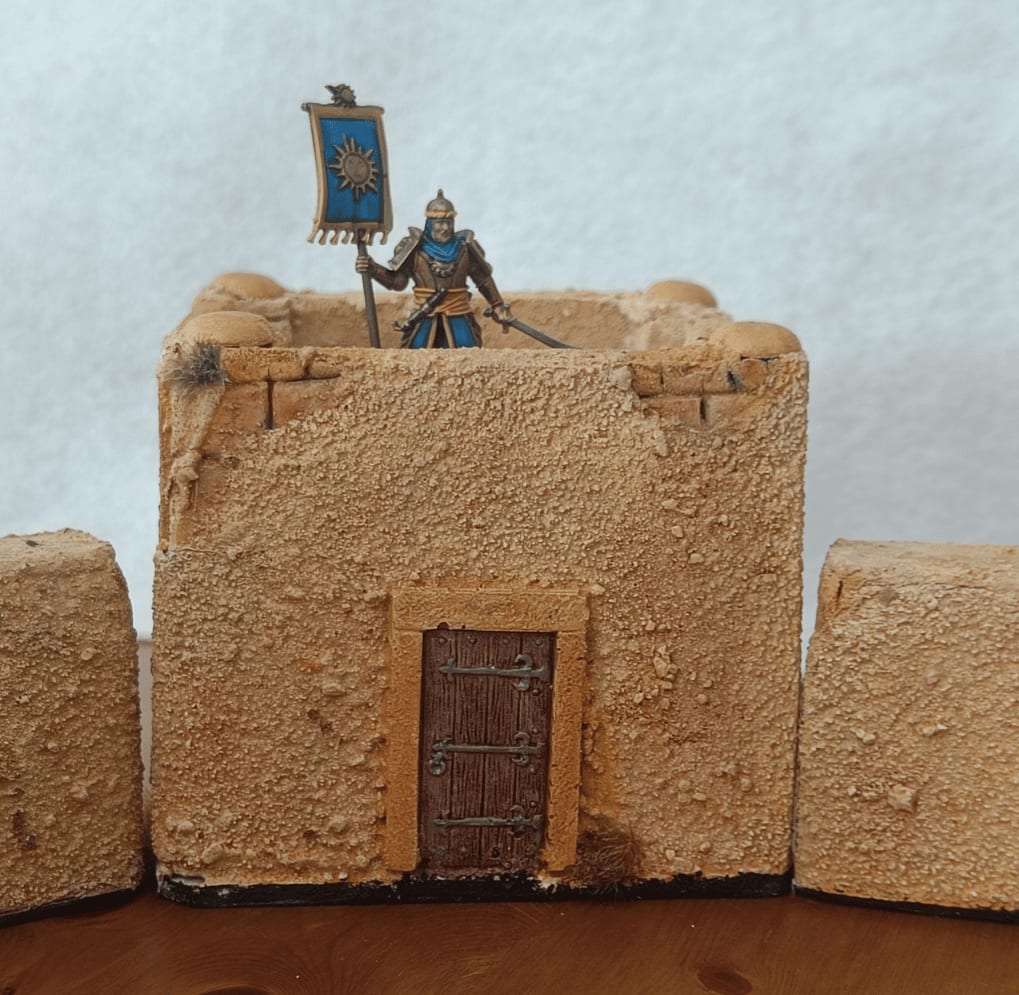
Another close-up. Since I realized I’d quickly use up all my doors, this is a door from the Zombicide game, but I made a silicone mold and then recast the door in resin so I can use many without tapping into my collection too much.

Another nice shot.
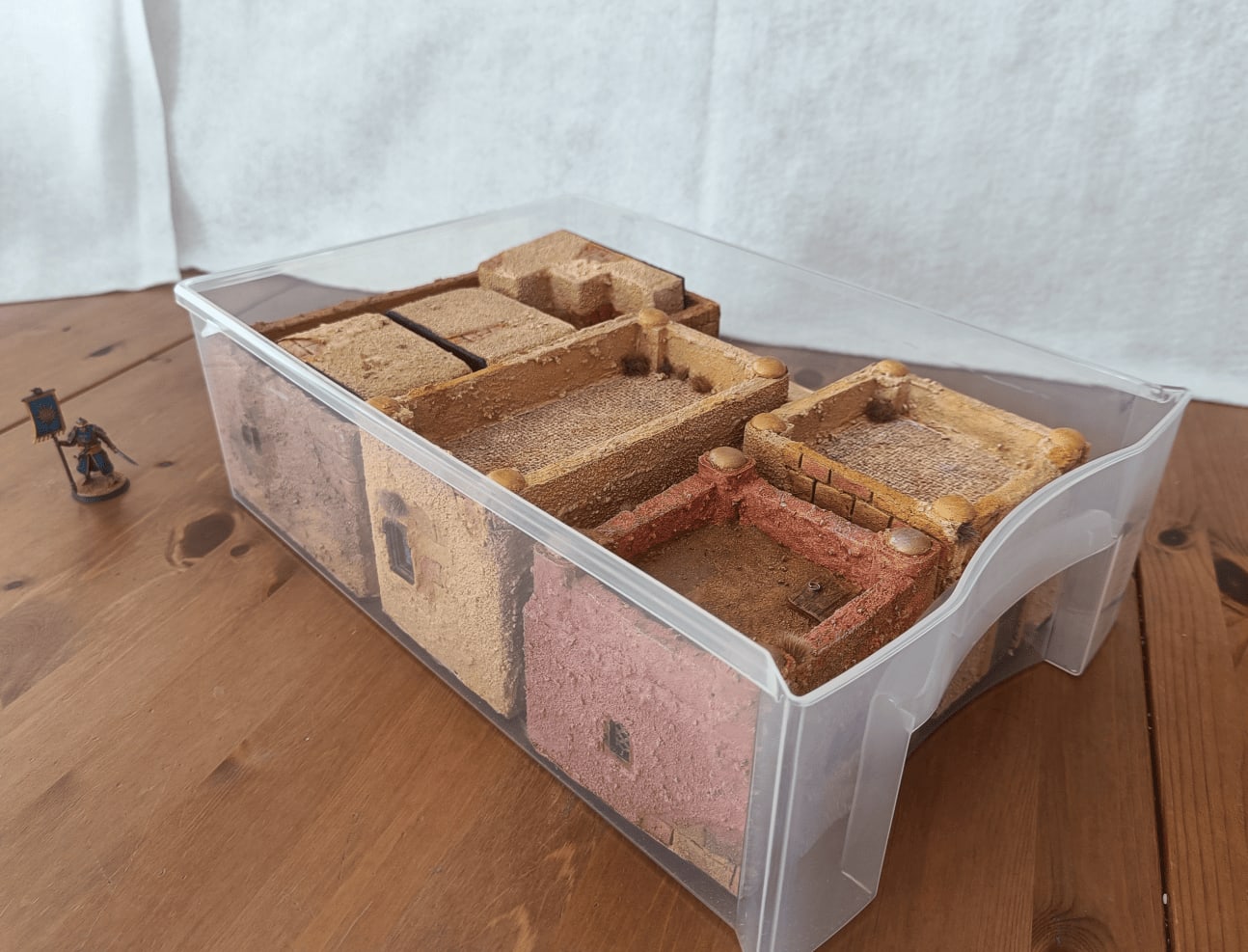
I’m happy with this because I needed these terrain pieces to store easily. I have a cabinet with lots of drawers, and each drawer is for roughly one biome. This was the desert city biome, and everything I have for the desert city fits in this drawer. I calculated the dimensions of my buildings so they’d fit in the width and height.
This project was simple to make and didn’t cost much. The buildings are durable and stackable, which is what I needed. The second color scheme (the paler tan and ochre) works much better than my first pink attempt.